Last Updated: October 4, 2026
- Top Pick: Chair Yoga for Seniors Over 60 Book & Chart – 30-Day Challenge, Gentle Seated Yoga Guide, Chair Yoga for Weight Loss & Flexibility, Senior Chair Exercises for Women & Men, 8.5×11" Book on Chair Yoga
- Best Value: Auroscent Fall Prevention Balance Exercises for Seniors
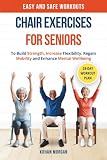
- Premium Choice: Chair Exercises for Seniors: Easy and Safe Workouts To Build Strength, Increase Flexibility, Regain Mobility and Enhance Mental Well-being
Top Chair Exercises Seniors Safe Seated Picks for 2026
Here are our current top chair exercises seniors safe seated picks, compared on real Amazon owner reviews, price, and features. Live prices update below.
As an Amazon Associate we earn from qualifying purchases at no extra cost to you.




![[All-in-One Kit] Chair Yoga for Seniors Over 60 | Cards + Bands + QR Videos](https://m.media-amazon.com/images/I/51fEHRkNR9L._SL160_.jpg)

Chair exercises for seniors offer a safe, practical way to build strength, improve mobility, and stay independent without ever standing up. If walking long distances has become difficult, or if balance worries keep you from traditional workouts, a sturdy chair turns your living room into a personal gym. Seated exercise keeps your heart, muscles, and joints working while dramatically reducing the risk of falls. In this guide, you will learn the benefits of seated workouts, essential safety rules, and seven specific exercises with step-by-step instructions you can start today.
Related: best mobility canes and walking aids.
The Benefits of Seated Workouts for Older Adults
Muscle mass naturally declines with age, and that loss affects everything from climbing stairs to carrying groceries to getting up from the toilet. The good news is that muscles respond to exercise at every age, and you do not need a gym membership to see results.
Regular chair exercise can help you maintain the leg strength needed to stand up independently, keep shoulders and arms capable of daily tasks, support healthy circulation in the legs and feet, and boost mood and energy. For seniors managing arthritis, seated movement is often more comfortable than standing routines because the chair removes much of the load from hips and knees. Combined with supportive habits — like the circulation support discussed in our guide to compression socks for seniors — a seated routine becomes part of a complete mobility plan.
Setting Up Safely
- Get medical clearance. Check with your doctor before beginning, particularly if you have heart disease, severe osteoporosis, or recent surgery.
- Use the right chair. Pick a stable, armless chair with a firm seat, placed against a wall so it cannot slide. No wheels, no folding chairs.
- Keep support nearby. If any exercise involves standing, keep one hand on the chair back. Those who use a mobility aid can review our complete walking cane guide for proper support technique.
- Warm up. March your feet gently and roll your shoulders for two to three minutes before starting.
- Hydrate and breathe. Sip water and never hold your breath during effort — exhale on the hard part of each movement.
7 Chair Exercises with Step-by-Step Instructions
1. Seated Marching
Sit tall with feet flat. Lift your right knee toward the ceiling, lower it, then lift the left. Continue alternating at a comfortable pace for 30 to 60 seconds. This warms up the hips and gets the heart pumping.
2. Sit-to-Stand
Scoot to the front edge of the chair, feet hip-width apart. Lean slightly forward, push through your heels, and stand up — using the armrests or a counter only if needed. Sit back down slowly with control. Repeat 5 to 10 times. This is the single most functional exercise for staying independent, because it trains the exact movement you use dozens of times a day.
3. Seated Leg Extensions
Sitting tall, slowly straighten your right knee until the leg is extended, hold for two seconds, then lower with control. Do 8 to 12 repetitions per leg. This strengthens the thigh muscles that protect your knees and power you up stairs.
4. Seated Heel and Toe Raises
With feet flat, lift both heels high while keeping toes down, then lower and lift the toes while keeping heels down. Alternate for 10 to 15 repetitions. Strong calves and shins improve walking stability and circulation.
5. Seated Shoulder Press
Hold light weights, water bottles, or no weight at all at shoulder height. Press both hands toward the ceiling until arms are nearly straight, then lower slowly. Do 8 to 12 repetitions. To add gentle resistance over time, see our guide to the best resistance bands for elderly users.
6. Seated Rowing
Extend both arms forward at shoulder height. Pull your elbows back as if rowing a boat, squeezing your shoulder blades together, then return. Do 10 to 12 repetitions to strengthen the upper back and improve posture. A supportive chair setup helps here — our back support pillow guide covers good seated alignment.
7. Seated Torso Twists
Cross your arms over your chest. Keeping hips facing forward, rotate your upper body gently to the right, return to center, then rotate left. Do 8 repetitions per side to keep the spine mobile for tasks like reversing in the car or reaching across the counter.
How Often and How to Progress
Aim for two to three sessions per week on non-consecutive days, allowing muscles time to recover. Start with one set of each exercise and build to two or three sets as you grow stronger. When the movements feel easy, add light hand weights, slow down each repetition, or increase the number of sit-to-stands. For more equipment ideas, browse our roundup of the best exercise equipment for seniors.
Warning Signs: When to Stop
Stop exercising and rest if you feel chest pain or tightness, severe shortness of breath, dizziness, or sudden joint pain. Contact your doctor if symptoms do not pass quickly. Exercising alone is safer with a backup plan; many seniors keep a fall detection device within reach for peace of mind. Mild muscle soreness the next day is normal and usually fades as your body adapts.
Frequently Asked Questions
Can chair exercises really build strength?
Yes. Studies of seated and supported exercise consistently show meaningful gains in leg and arm strength in older adults. The key is consistency and gradually increasing the challenge as exercises become easier.
How long should a chair workout last?
Beginners do well with 10 to 15 minutes. As your stamina improves, 20 to 30 minutes including a warm-up and gentle stretching is an excellent goal.
Are chair exercises safe for people in wheelchairs?
Many of these movements — marching variations, leg extensions, shoulder presses, rows, and twists — can be adapted for wheelchair users. Lock the wheels first and ask a physical therapist to tailor the routine to your abilities.
Should I do chair exercises every day?
Gentle movement like marching and stretching is fine daily. Strength-focused exercises such as sit-to-stands and leg extensions work best with a rest day in between so muscles can rebuild.
What if I cannot do a full sit-to-stand without using my hands?
That is completely normal at first. Use the armrests or place a firm cushion on the seat to raise the starting height, then reduce assistance as your legs grow stronger over the coming weeks.
Related Reviews & Guides


4 Best Loud Alarm Clocks with Vibrating Bed Shaker for Blind…

7 Best Pill Organizers: Top Picks Reviewed and Compared (2026)