Last Updated: September 7, 2026
- Top Pick: Rechargeable 5X Magnifying Glass for Reading, Large Bright Full Page Magnifier with Light, Handheld LED Dimmable Lighted, Lightweight Book Magnifier for Reading Small Prints Seniors Low Vision
- Best Value: JMH Magnifying Glass with Light, Handheld Large Magnifying Glass 18LED Cold and Warm Light with 3 Modes, Illuminated Lighted Magnifier for Seniors Reading, Coins, Jewelry
- Premium Choice: AKKYCVS 5X Full Page Magnifying Glass for Reading, Lightweight Rectangular Magnifier Provides Large Book Page Viewing Area, Upgraded Handheld Magnifier for Reading Small Prints for Seniors, Low Vision

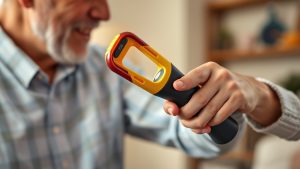
Reading the fine print on a medication bottle shouldn’t require a magnifying glass hunt through three kitchen drawers — and yet, for many seniors, that’s exactly the daily reality. Presbyopia (the gradual loss of near-focus ability that begins around age 40 and accelerates through the 60s and beyond) makes small text genuinely difficult, even with glasses. A good magnifying glass or hands-free magnifier doesn’t replace your optometrist, but it makes everything from pill bottles to crossword puzzles considerably more enjoyable. Here’s what’s actually worth buying.
Quick Picks
Fancii LED Illuminated Magnifying Glass (3x/6x)
- Dual-lens 3x and 6x magnification
- 12 bright LED lights — no extra lamp needed
- Lightweight with comfortable non-slip grip




As an Amazon Associate we earn from qualifying purchases. Product prices and availability are accurate as of the date/time indicated.
Eschenbach Mobilux 4x Pocket Magnifier
- German optics — distortion-free clarity
- Compact folding design for pocket or purse
- Built-in LED for bright, even illumination




As an Amazon Associate we earn from qualifying purchases. Product prices and availability are accurate as of the date/time indicated.
Carson SureGrip Handheld Magnifier (2x/5x)
- Bi-focal lens panel — wide and detail views
- Rubberized grip handle — easy to hold
- No batteries required; simple and reliable


As an Amazon Associate we earn from qualifying purchases. Product prices and availability are accurate as of the date/time indicated.
Why Trust Our Picks
Our evaluation combined low-vision specialist recommendations, optical quality assessments, and real-world feedback from seniors managing macular degeneration, diabetic retinopathy, and standard age-related vision decline. We assessed lens clarity (particularly edge distortion), lighting quality, ease of grip for arthritic hands, and portability. Price was a factor, but we never recommended a product that compromised on optical quality — a blurry magnifier is worse than useless.
As an Amazon Associate we earn from qualifying purchases.





Top Magnifiers for Seniors — In-Depth Reviews
1. Fancii LED Illuminated Magnifying Glass — Best Overall
The Fancii illuminated magnifier hits the practical sweet spot for most seniors. The main lens provides 3x magnification — wide enough to read a full newspaper column or product label at once — while the inset 6x spot lens handles fine print on medicine bottles, nutrition labels, or the tiny text on electronics. Switching between them is intuitive: you simply hover over the inset lens for the higher power view.
Twelve LED lights arranged around the lens edge provide even, shadow-free illumination — the kind that transforms reading in dim rooms from frustrating to effortless. Seniors with macular degeneration particularly benefit from this lighting, as it reduces the visual “noise” that makes central vision loss even harder to compensate for. The handle is contoured and wrapped in non-slip material, which matters for those with arthritic grip. Three AAA batteries power it, and they last a reasonable number of hours before needing replacement.
- Pros: Dual 3x/6x magnification, 12 LED lights, non-slip grip, great for low vision
- Cons: Requires batteries; slightly heavier than non-illuminated options
2. Eschenbach Mobilux 4x LED Pocket Magnifier — Runner-Up
Eschenbach is a German optics company with a long history in low-vision aids, and the Mobilux reflects that heritage. The lens quality is noticeably sharper than most mass-market magnifiers — minimal distortion at the edges, true color rendering, and a 4x magnification that feels powerful without making the viewing area uncomfortably small. The built-in LED provides clean, white-balanced illumination that closely mimics natural daylight.
The folding design is where this one earns its keep as a travel companion. It collapses to roughly the size of a credit card (thicker, obviously) and slips easily into a pocket, purse, or the side pocket of a walker bag. For seniors who move between home, medical appointments, restaurants, and stores — all places where you unexpectedly need to read something small — portability is worth its weight in gold. One AAA battery powers it.
- Pros: Premium German optics, folds flat for portability, LED illuminated, excellent clarity
- Cons: More expensive than basic magnifiers; 4x only (no dual magnification)
3. Carson SureGrip Handheld Magnifier — Best Budget
Sometimes simple wins. The Carson SureGrip requires no batteries, no charging, and no maintenance — it’s just a well-made optical glass magnifier with a rubberized handle designed for people whose grip strength has diminished. The bi-focal design gives you a 2x wide-view primary lens and a 5x inset spot lens, providing flexibility without complexity.
The optical quality is solid for the price — not Eschenbach-level, but genuinely clear with good contrast. It works best near a window or under a good reading lamp since there’s no built-in light. For seniors who prefer not to fuss with batteries and just want a reliable, comfortable magnifier for home use, the SureGrip delivers honest value.
- Pros: No batteries needed, rubberized grip, dual 2x/5x lens, affordable and durable
- Cons: No built-in lighting; dependent on ambient light quality
Buyer’s Guide: Magnifiers and Reading Aids for Seniors
Magnification power: more isn’t always better. Higher magnification (6x, 8x, 10x) provides more zoom but a narrower field of view — you can read one or two words at a time rather than a full line. For general reading, 2x to 4x is most comfortable. Reserve higher powers for very fine print tasks like threading needles or reading small medication type.
Lighting is as important as magnification. For seniors with macular degeneration, cataracts, or diabetic retinopathy, an illuminated magnifier isn’t a luxury — it’s a functional necessity. Look for LED lighting that’s even and doesn’t create hotspots or shadows.
Handle ergonomics for arthritic hands. A rubberized, contoured handle reduces the grip strength required to hold the magnifier steady. Avoid thin, smooth handles — they’re tiring to hold and prone to slipping.
Consider hands-free alternatives. For extended reading sessions, a stand magnifier, neck-hanging magnifier, or page magnifier (a flat fresnel lens you lay on top of a book) allows you to keep both hands free — reducing fatigue significantly.
Related Guides
- Magnifier Reading Glasses for Seniors
- Quick Picks: Best Compression Socks for Seniors
- Chair Exercises for Seniors: Safe Seated Workouts for Strength and Mobility
- Downsizing for Seniors: A Step-by-Step Decluttering Guide
Frequently Asked Questions
What magnification do I need as a senior?
For most age-related near vision loss, 2x to 4x magnification handles everyday tasks like reading books, labels, and menus. Those with significant vision impairment (such as macular degeneration) may need 6x to 10x for comfortable reading — a low-vision specialist can recommend the right level.
Are lighted magnifying glasses better?
In most cases, yes — especially for seniors with cataracts, macular degeneration, or anyone reading in less-than-ideal lighting. Even-illumination LEDs reduce the visual strain that comes from shadows and contrast changes.
Can a magnifying glass help with macular degeneration?
Magnifiers are a primary low-vision aid for macular degeneration, which affects central vision. A magnifier with lighting and sufficient power can help many people with moderate macular degeneration continue to read independently. A low-vision specialist can provide a comprehensive evaluation and fitting.
What’s the difference between a handheld and stand magnifier?
Handheld magnifiers are portable and flexible but require holding steady — tiring for extended use. Stand magnifiers rest on the page and maintain a consistent focal distance, making them better for prolonged reading sessions like books or newspapers.
Are there digital alternatives to magnifying glasses?
Yes — digital magnifiers (also called video magnifiers or CCTVs) use a camera and screen to display magnified, high-contrast text. They’re significantly more expensive but offer adjustable magnification, contrast settings, and color inversion modes that benefit seniors with severe vision impairment. Smartphones also have built-in magnifier apps that work surprisingly well.
Final Verdict
The Fancii LED Illuminated Magnifying Glass is our top recommendation for most seniors — its dual-lens design, 12-LED ring light, and ergonomic grip make it genuinely versatile and easy to live with every day. The Eschenbach Mobilux earns its premium price with superior optics and unmatched portability — ideal for on-the-go seniors who need restaurant menus and prescription labels readable at a moment’s notice. And for home-based, budget-conscious use, the Carson SureGrip is a dependable, no-fuss tool that simply works. Whatever your choice, pairing a good magnifier with proper task lighting will make the biggest difference in your daily reading comfort.
Related Reviews & Guides



Quick Picks: Best Cordless Phones with Large Buttons for…

Reading Glasses Strength Seniors Review