Last Updated: October 22, 2026
The best shoes for ankle and arch support are stability walking shoes with a removable insole, a firm heel counter and a structured midfoot, and the strongest all-around choices are the Brooks Adrenaline GTS, the Hoka Arahi, the New Balance Fresh Foam X 860 and the ASICS Gel-Kayano. They suit older adults whose arches have flattened and whose ankles feel less steady than they used to.
The arch and ankle work as one system. When the arch sags, the heel tilts inward, and the ankle has to work harder to stay balanced. A shoe that supports both ends of that chain usually reduces foot ache, shin strain and the wobbly feeling that makes walking tiring.

Brooks Men’s Adrenaline GTS 25 Supportive Running & Walking Shoe - Primer Grey/Ebony/Jasmin - 10.5 Medium
Included for 'Best Shoes for Ankle and Arch Support: Stability Picks 2026' because the listing specifies Primer Grey/Ebony/Jasmin and 10.5 Medium, details this guide uses to compare options.
View on Amazon
Brooks Men’s Adrenaline GTS 25 Supportive Running & Walking Shoe - White/Black/White - 10.5 Wide
Included for 'Best Shoes for Ankle and Arch Support: Stability Picks 2026' because the listing specifies White/Black/White and 10.5 Wide, details this guide uses to compare options.
View on Amazon
Brooks Women’s Adrenaline GTS 25 Supportive Running & Walking Shoe - Grey/Blackened Pearl/Coral - 7 Medium
Included for 'Best Shoes for Ankle and Arch Support: Stability Picks 2026' because the listing specifies Grey/Blackened Pearl/Coral and 7 Medium, details this guide uses to compare options.
View on Amazon
Brooks Men’s Adrenaline GTS 25 Supportive Running & Walking Shoe - Black/Black/Ebony - 10.5 Medium
Included for 'Best Shoes for Ankle and Arch Support: Stability Picks 2026' because the listing specifies Black/Black/Ebony and 10.5 Medium, details this guide uses to compare options.
View on AmazonUnderstand what you need
Check your arch type
Wet your foot and step on a dark paper bag or a flat floor. A full footprint with little curve suggests flat feet, which usually do best in stability shoes. A thin band connecting heel and ball suggests a high arch, which usually needs extra cushioning and a flexible, neutral shoe rather than a corrective one.
Match support to arch
| Arch type | Common sign | Shoe type to look for |
|---|---|---|
| Flat or low | Foot rolls inward, inner shoe edge wears fast | Stability with a medial post or guide rail |
| Neutral | Even wear across the heel | Cushioned neutral or mild stability |
| High | Outer edge wears, foot feels rigid | Soft cushioning, flexible forefoot |
| Fallen arch from age or tendon weakness | Ache along the inner ankle | Rigid stability shoe with an orthotic |
Look at the heel counter
A hard, cup-shaped heel keeps the ankle from rocking. Squeeze it. If it collapses, keep shopping.
Insole depth
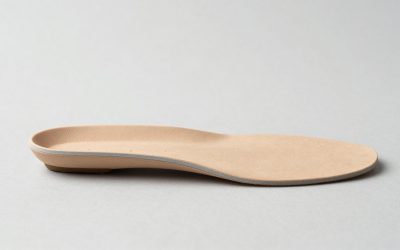
A removable factory insole lets you swap in a custom orthotic or an over-the-counter arch support. A glued-in liner locks you into whatever came in the shoe.
Strong picks to compare
Brooks Adrenaline GTS: best for steady everyday support
The GuideRails system limits excess motion, and the cushioning is comfortable on pavement. Offered in narrow to extra-wide sizes.
Hoka Arahi: best lightweight stability
Lighter than most stability shoes with a broad base, good for those who find heavier shoes tiring.
New Balance Fresh Foam X 860: best for flat feet
Firm medial post with plenty of width options, helpful for swollen or flat feet.
ASICS Gel-Kayano: best structured premium option
A traditional stability model with a cushioned heel and a firm frame. Useful for heavier builds or stronger arch needs.
Hoka Bondi: best soft cushion for neutral arches
Plush and supportive in a gentle way, with less correction. Best for neutral or higher arches with achy joints.
Skechers Arch Fit: best budget arch-focused pick
Includes a podiatrist-certified insole for arch comfort. Less structured at the ankle than a true stability shoe.
Compare the picks
| Shoe | Arch support | Ankle stability | Removable insole | Best for | Price tier |
|---|---|---|---|---|---|
| Brooks Adrenaline GTS | Moderate to firm | High | Yes | Daily walking | Mid to upper mid |
| Hoka Arahi | Moderate | High | Yes | Light support | Upper mid |
| New Balance Fresh Foam X 860 | Firm | High | Yes | Flat feet | Mid-range |
| ASICS Gel-Kayano | Firm | High | Yes | Strong correction | Upper mid to premium |
| Hoka Bondi | Soft to moderate | Moderate | Yes | Neutral arches | Upper mid |
| Skechers Arch Fit | Moderate | Moderate | Yes | Budget comfort | Budget |
Fitting and testing in the store
- Try both shoes on, and stand up and walk for several minutes.
- Check that the arch bump sits under your own arch, not ahead of or behind it.
- Leave about a thumb’s width beyond the longest toe.
- Press the heel counter and twist the sole for stiffness.
- Take your orthotic inserts to confirm they fit without crowding the foot.
When shoes are not enough
Pain along the inside of the ankle, a foot that is flattening quickly or an ankle that gives way suggest a tendon problem that needs a podiatrist. Custom orthotics, a brace or physical therapy may be needed alongside good shoes.
Frequently asked questions
Do arch supports help with ankle pain?
Often yes, when the arch is collapsing and tilting the heel. Supports that match your arch can ease strain on tendons around the ankle.
Are expensive orthotics better than shoe insoles?
Custom orthotics are tailored to your foot and can help in complex cases. Over-the-counter inserts work for many people with mild issues.
How long should supportive shoes last?
Usually 300 to 500 miles of walking, or around a year with regular use. Replace them sooner when the midsole feels flat.
Which one should you choose?
Pick the Brooks Adrenaline GTS or New Balance 860 for flat feet, the Hoka Arahi for a lighter option and the Gel-Kayano for firm correction. Choose the Bondi or Arch Fit if your arch is neutral and comfort comes first. Always try shoes on in the afternoon and confirm the insole can come out.
Related Reviews & Guides



Quick Picks: Best Screen Magnifiers for Seniors
Pickleball for Seniors: How to Get Started Safely