Last Updated: October 4, 2026
The best shoes for seniors with balance problems usually share the same handful of features: a low, wide heel (under 1 inch), a thin-to-moderate slip-resistant rubber sole, a firm heel counter, a secure closure such as laces or adjustable straps, and a roomy toe box. Brand matters less than these measurements. This guide explains what to look for, how to check fit at home and which well-known walking shoes for seniors fit the profile. It offers general information only; anyone with frequent falls, dizziness, numbness in the feet or a diagnosed condition should get advice from a doctor, physical therapist or podiatrist, who may recommend specific footwear or inserts.
Quick answer: For most people in 2026, the best shoes for seniors with balance problems is the Heel height — our #1 rated choice. See the full ranked comparison, alternatives and buying advice below.
The features that matter, with measurements
| Feature | What to look for | Why it helps stability |
|---|---|---|
| Heel height | About 1 in (2.5 cm) or less | Keeps the body’s weight centered over the feet |
| Heel width | Roughly as wide as your own heel, or wider | Wider base resists rolling sideways |
| Sole thickness | Thin to moderate, about 0.5–1.25 in at the heel | Very thick, soft soles can feel unsteady and reduce sense of the ground |
| Heel-to-toe drop | About 4–10 mm | Moderate drop suits most walking gaits |
| Outsole | Rubber with a textured or multi-directional tread | Better grip on tile, wet pavement and wood floors |
| Heel counter | Firm cup that does not fold when squeezed | Holds the heel in place on uneven ground |
| Toe space | About 3/8–1/2 in (a thumb’s width) beyond the longest toe | Room for swelling without the foot sliding |
| Weight | Roughly 8–14 oz per shoe | Heavy shoes can make it harder to lift the feet and clear steps |
What to avoid
- Backless slippers and slides. Without a heel, the foot can slip out and toes tend to grip to hold the shoe on.
- Smooth leather or worn soles. Old soles lose their grip pattern; once the tread is worn flat, especially at the heel, consider replacing the shoes.
- Very thick, cushy “max cushion” soles for people who already feel unsteady. Plenty of cushioning is not bad, but tall, soft platforms may feel wobbly. If you like them, choose a model with a wide base.
- Overly sticky rubber on carpet. Extremely grippy soles can catch on thick carpet. A moderate tread works better indoors.
- Socks-only or stocking feet on smooth floors.
Non slip shoes for elderly: how to judge grip
“Slip-resistant” on a label is not a guarantee. Some practical checks:

Orthofeet Coral Orthopedic Women Sneakers, Black, Size 8.5
Included for 'Best Shoes for Seniors With Balance Problems: Sole, Heel and Fit Features That Matter' because the listing specifies Black and Size 8.5, details this guide uses to compare options.
View on Amazon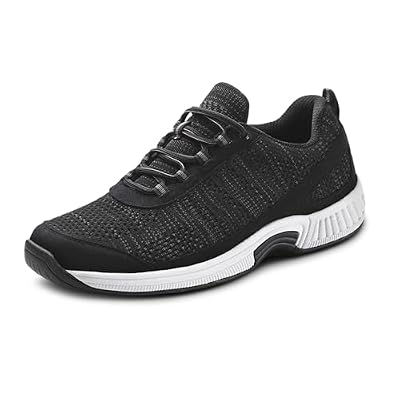
Orthofeet Lava Orthopedic Men's Walking Shoes, Black, Size 9
Included for 'Best Shoes for Seniors With Balance Problems: Sole, Heel and Fit Features That Matter' because the listing specifies Black and Size 9, details this guide uses to compare options.
View on Amazon
Orthofeet Francis Orthopedic Women's Walking Shoes, Blue, Size 8.5
Included for 'Best Shoes for Seniors With Balance Problems: Sole, Heel and Fit Features That Matter' because the listing specifies Blue and Size 8.5, details this guide uses to compare options.
View on Amazon
Orthofeet Kita Orthopedic Women's Sneaker, Grey, Size 8
Included for 'Best Shoes for Seniors With Balance Problems: Sole, Heel and Fit Features That Matter' because the listing specifies Grey and Size 8, details this guide uses to compare options.
View on Amazon- Look at the tread. Many small grooves running in different directions channel water better than a few shallow lines.
- Press a thumb into the sole. Softer rubber generally grips smooth floors better than hard plastic-like compounds.
- Check for a work-style slip-resistance rating. Shoes designed for restaurant or healthcare workers often meet slip-resistance standards and make good indoor shoes.
Supportive shoes for older adults: types compared
| Shoe type | Stability | Ease of putting on | Best for | Usual price range |
|---|---|---|---|---|
| Lace-up walking shoe | High | Moderate | Daily walks, outdoor errands | $70–$150 |
| Hook-and-loop (strap) walking shoe | High | Easy | Limited hand strength or arthritis in fingers | $60–$140 |
| Hands-free slip-in with heel counter | Moderate to high | Very easy | People who struggle to bend down | $70–$130 |
| Closed-back house shoe with rubber sole | Moderate | Easy | Indoors, instead of slippers | $40–$90 |
| Extra-depth / wide shoe | High | Moderate | Swelling, bunions, room for prescribed inserts | $90–$180 |
Well-known walking shoes for seniors that match the profile
These lines are widely available and commonly recommended for their stable designs. Fit varies by foot, so use them as a starting point rather than a prescription.
- New Balance 608 and 928 walking shoes: leather uppers, firm heel counters and wide sizes (up to extra-wide in many versions). Lace and strap versions exist.
- Brooks Addiction Walker: a supportive walking shoe with a slip-resistant outsole and a stable, wide platform; available in wide widths.
- Propét Stability Walker: designed with a wide base and extra-depth options; offered in strap and lace versions.
- Skechers Hands Free Slip-ins: a molded heel lets you step in without bending, with a heel that holds its shape. Check the specific model for a low, wide sole.
- Orthofeet and Dr. Comfort: brands focused on extra-depth, wide toe boxes and removable insoles that can make room for custom orthotics.
Decision matrix by situation
| Situation | Shoe features to prioritize |
|---|---|
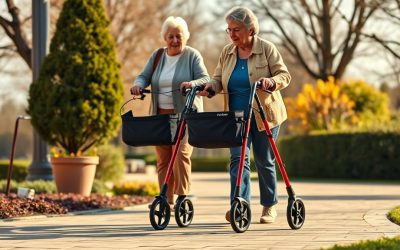
| Uses a cane or walker | Low heel, wide base, secure straps; lightweight to make lifting easier |
| Arthritis in hands | Hook-and-loop closures or hands-free slip-in design |
| Swollen feet by afternoon | Adjustable straps, stretch uppers, extra depth; shop later in the day |
| Mostly indoors on tile or wood | Closed-back house shoe with a rubber, textured sole |
| Walks outdoors on uneven paths | Lace-up walking shoe with firm heel counter and deeper tread |
| Wears custom orthotics | Removable insole and extra-depth construction |
How to check fit at home
- Measure both feet standing up, preferably in the afternoon when feet are slightly larger. Many adults have one foot about half a size bigger; fit the larger foot.
- Try shoes with the socks you usually wear, and with any inserts you use.
- Check the toe space: about a thumb’s width between the longest toe and the end of the shoe.
- Check the heel: walk a few steps. The heel should not lift out more than a little.
- Walk on a hard floor and a carpet before removing tags, with someone nearby for support if needed.
When to replace shoes
Walking shoes used daily typically wear out after about 300 to 500 miles, which for someone walking 2 miles a day is roughly 5 to 8 months. Signs it is time: the heel tread is worn smooth, the shoe leans to one side when placed on a table, the heel counter collapses when squeezed, or the closure no longer holds firmly.
Beyond footwear
Shoes are one part of reducing fall risk at home. Good lighting, removing loose rugs, grab bars in the bathroom and stair rails all help. A physical therapist can also suggest balance and strength exercises suited to an individual, and an eye check or medication review with a doctor may be worthwhile for anyone who feels unsteady.
Ready to decide? Our #1 pick for 2026 is the Heel height.
Live price & availability on Amazon.
Related Reviews & Guides




8 Best Wall Mount Jar Openers for Seniors: Open Any Jar Without Struggle

5 Best Protein Powders for Seniors: Easy Muscle Support