Last Updated: September 5, 2026

A transport wheelchair fills a specific and important niche — it’s designed not for self-propulsion, but for being pushed by a caregiver, family member, or aide. Because the user isn’t doing the pushing, transport chairs can be made dramatically lighter than standard wheelchairs, which makes loading them into a car trunk, maneuvering through narrow hallways, and handling stairs far more manageable. If your loved one needs occasional mobility assistance at doctor’s visits, outings, or airports, a lightweight transport wheelchair is often far more practical than a full-sized manual or power chair. Here’s what we found after evaluating the leading models available today.
Quick Picks
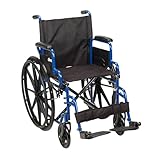
Drive Medical Lightweight Transport Wheelchair
- Only 19 lbs — easy one-person loading
- Swing-away footrests for easy transfer
- Durable powder-coated steel frame


As an Amazon Associate we earn from qualifying purchases. Product prices and availability are accurate as of the date/time indicated.
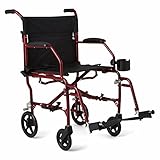
Medline Transport Wheelchair with Handbrakes
- Attendant hand brakes for slope safety
- 18″ wide seat fits most users
- Lightweight aluminum frame at 18 lbs

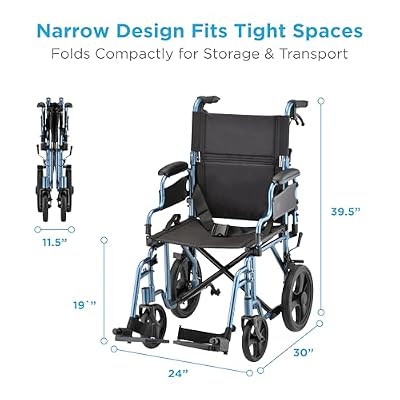
NOVA Transport Chair – Lightweight Folding Aluminum Wheelchair with Flip-Up Arms, Locking Handbrakes, 8” & 12” All-Terrain Wheels – Collapsible Travel Chair for Adults up to 300 lbs - Blue




As an Amazon Associate we earn from qualifying purchases. Product prices and availability are accurate as of the date/time indicated.
Carex Transport Wheelchair
- Budget-friendly without sacrificing basics
- Folds flat for car trunk storage
- Padded seat and back for comfort

Black Hammertone Transport Chair, 19inch Seat, 300lbs Weight Capacity, Lightweight


As an Amazon Associate we earn from qualifying purchases. Product prices and availability are accurate as of the date/time indicated.
Why Trust Our Picks
Our team at SeniorInfo4U evaluates mobility aids with input from physical therapists, caregivers, and the seniors who actually use these chairs day to day. We focus on real-world usability — how easily a chair folds, whether the footrests are genuinely easy to swing away, and how comfortable extended sitting actually feels. Brand reputation and parts availability also factor into our recommendations, since a wheelchair you can’t get serviced is a liability.
As an Amazon Associate we earn from qualifying purchases at no extra cost to you.






Our Top Picks — Reviewed
1. Drive Medical Lightweight Transport Wheelchair — Best Overall
Drive Medical is one of the most recognizable names in home medical equipment, and their flagship transport wheelchair earns that recognition. At approximately 19 pounds, it’s light enough for most caregivers to lift unassisted into a sedan trunk — an important practical consideration that often gets overlooked when shopping online. The swing-away footrests detach completely, making patient transfers easier and reducing the risk of tripping. The padded nylon seat and back are comfortable for outings of a few hours, and the folding mechanism is a single-bar cross-fold that most people figure out in under a minute.
- Pros: Lightweight at ~19 lbs; easy fold; swing-away detachable footrests; reliable brand; widely available replacement parts
- Cons: No attendant hand brakes (standard for this model); limited cushioning for very long outings
2. Medline Transport Wheelchair with Handbrakes — Runner-Up
What elevates the Medline model above others in its class is the attendant hand brakes — levers mounted on the push handles that the caregiver can squeeze to slow or stop the chair, especially on inclines. This feature is surprisingly uncommon in transport chairs but makes a meaningful safety difference when navigating ramps, curb cuts, or sloped parking lots. The aluminum frame brings the weight down to about 18 pounds, slightly lighter than the Drive Medical steel frame. The 18-inch seat width accommodates most users comfortably without the excess bulk of a bariatric model.
- Pros: Attendant hand brakes for slope safety; aluminum frame; 18″ seat width; lightweight
- Cons: Slightly higher price; footrest adjustment can be stiff initially
3. Carex Transport Wheelchair — Best Budget
The Carex is the right choice when you need a serviceable transport chair without spending on features you won’t use. It handles flat surfaces and indoor environments well — medical offices, shopping centers, family gatherings. The padded seat and back provide reasonable comfort for shorter outings. It folds flat and fits in most car trunks without issue. Where it gives ground to pricier models: the frame is heavier steel rather than aluminum, and there are no hand brakes. For occasional use in controlled environments, though, those limitations rarely matter.
- Pros: Very affordable; folds flat; padded seating; adequate for indoor and flat outdoor use
- Cons: Heavier steel frame; no attendant brakes; less refined finish than premium models
4. Pride Mobility Go-Chair Transport — Best for Active Outings
Pride Mobility is best known for their power chairs, but their transport-focused Go-Chair brings some of that engineering philosophy to a manually pushed chair. The slightly larger rear wheels provide better traction on uneven outdoor surfaces — cobblestone, packed gravel, slightly rough pavement — without crossing into self-propulsion territory. The seat padding is notably more generous than most transport chairs, which matters if your outings run two or more hours. The tradeoff is additional weight and a higher price point.
- Pros: Better outdoor traction; generous seat padding; sturdy construction; Pride brand reliability
- Cons: Heavier than dedicated transport chairs; more expensive; larger folded footprint
5. Nova Medical Transport Chair — Best for Bariatric Needs
Standard transport chairs typically support users up to 250–300 lbs. The Nova Medical bariatric transport chair is rated for up to 400 lbs and features a wider 20-inch seat, reinforced frame, and heavier-duty wheels. Despite its extra capacity, the fold mechanism works smoothly — this is not a chair that punishes you for needing a more robust option. If a standard-width seat is a comfort issue, the Nova is the answer.
- Pros: 400 lb capacity; 20″ wide seat; reinforced frame; smooth fold mechanism
- Cons: Heavier than standard models; larger and less nimble in tight spaces
Buyer’s Guide: Choosing the Right Transport Wheelchair
Weight capacity and seat width: Always check the manufacturer’s stated weight limit and confirm the seat width is appropriate. A seat that’s too narrow is uncomfortable and potentially unsafe; one that’s too wide doesn’t provide lateral support.
Frame material: Steel frames are more durable and less expensive; aluminum frames are lighter and better for caregivers who lift the chair frequently. If the caregiver has their own physical limitations, aluminum is worth the price difference.
Attendant brakes: Essential if you’ll be on any kind of slope. If your primary use is flat indoor environments, they’re a nice-to-have. If you live in a hilly area or attend events with outdoor ramps, they move from optional to necessary.
Footrest design: Swing-away footrests that fully detach make transfers much easier. Fixed footrests save money but add complication every time the user gets in or out of the chair.
Frequently Asked Questions
What is the difference between a transport wheelchair and a standard wheelchair?
A transport wheelchair has small rear wheels and is designed to be pushed by a caregiver — the user cannot self-propel. A standard manual wheelchair has large rear wheels so the user can push themselves independently. Transport chairs are significantly lighter as a result.
Will Medicare cover a transport wheelchair?
Medicare Part B may cover transport wheelchairs when deemed medically necessary and ordered by a physician. Coverage typically requires documentation that the user cannot walk and that the chair will be used primarily in the home. Consult your doctor and Medicare directly for current requirements.
How do I measure the right seat width?
Measure across the widest part of the user’s hips while seated, then add 1–2 inches on each side for clearance. This gives you the minimum seat width you need.
Can a transport wheelchair be used as a shower chair?
Standard transport wheelchairs are not waterproof and should not be used in the shower. There are specifically designed shower wheelchairs with rust-resistant aluminum frames and drainage holes — a different product category entirely.
How do I keep a transport wheelchair in good condition?
Wipe the frame and seat with a damp cloth regularly. Check the tires for proper inflation if they’re pneumatic, and inspect the fold mechanism and footrest hinges every few months for loosening hardware. Store indoors when possible to prevent rust on steel-frame models.
Final Verdict
For most families, the Drive Medical Lightweight Transport Wheelchair is the sweet spot — trusted brand, practical weight, simple operation, and fair pricing. If your outings include any inclines or slopes, upgrade to the Medline model with attendant hand brakes for the added safety margin. Budget-focused shoppers will find the Carex performs well for occasional, flat-surface use. Whichever model you choose, the right transport wheelchair means more outings, more independence, and less burden on caregivers — all of which make a real difference in quality of life.
Related Guides
- Best Non-Slip Stair Treads for Senior Home Safety
- Best Portable Ramps for Wheelchairs: Access Anywhere 2026
- Best Mobility Scooter For Sell 2026
- Patient Transfer Board Guide
Related Reviews & Guides




Portable Handrail Indoor Freestanding

Cane With Seat Walking Stool