Last Updated: September 7, 2026
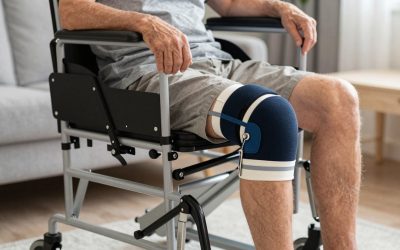
Knee pain is one of the most common complaints among adults over 60 — whether it’s osteoarthritis wearing down cartilage, post-surgical instability, or the cumulative ache of decades of activity. A quality knee brace won’t reverse that damage, but it can meaningfully reduce pain, improve stability, and restore confidence during daily activities like walking, climbing stairs, or gardening. The challenge is cutting through a market flooded with vague “supports” that do little beyond providing warmth. Here’s what actually works.
Quick Picks
DonJoy Performance Bionic Knee Brace
- Bilateral hinges for medial/lateral support
- Lightweight, low-profile design
- Recommended by orthopedic surgeons


As an Amazon Associate we earn from qualifying purchases. Product prices and availability are accurate as of the date/time indicated.
Bauerfeind GenuTrain Knee Support
- Medical-grade compression knit
- Anatomical 3D knit construction
- Patellar pad for kneecap stabilization


As an Amazon Associate we earn from qualifying purchases. Product prices and availability are accurate as of the date/time indicated.
Medline Knee Stabilizer with Stays
- Side stabilizing stays
- Open patella design
- Adjustable straps for custom fit

Bracoo Adjustable Compression Knee Patellar Pad Tendon Support Sleeve Brace for Men Women - Arthritis Pain, Injury Recovery, Running, Workout, KS10 (Black)


As an Amazon Associate we earn from qualifying purchases. Product prices and availability are accurate as of the date/time indicated.
Why Trust Our Picks
Our editorial team reviewed clinical literature on knee orthosis efficacy, consulted physical therapist recommendations, and prioritized products with meaningful structural support rather than just compression sleeves. All picks have been verified against senior-specific concerns: ease of donning and doffing (critical for those with limited hand strength or dexterity), washability, and sizing availability through extra-large.
As an Amazon Associate we earn from qualifying purchases.



Individual Product Reviews
1. DonJoy Performance Bionic Knee Brace — Best Overall
DonJoy is a name that appears repeatedly in orthopedic surgeon recommendations, and the Bionic brace demonstrates why. The bilateral polycentric hinges — one on each side of the knee — provide genuine medial and lateral stability, not just compressive warmth. The frame is rigid enough to meaningfully restrict harmful sideways movement while remaining low-profile enough to fit under most pants legs. Adjustable straps mean fit can be refined as swelling changes throughout the day. Available in multiple sizes with a detailed sizing guide.
- Pros: Bilateral hinges, surgeon-recommended brand, low profile, adjustable fit, durable construction
- Cons: Premium price; hinged braces take some practice to apply correctly
2. Bauerfeind GenuTrain Knee Support — Runner-Up
Bauerfeind is a German medical device manufacturer whose products are standard issue in many European clinical settings. The GenuTrain is their flagship knee support — and unlike simpler sleeves, its three-dimensional knit structure applies graduated compression that’s anatomically mapped to knee anatomy. The patellar pad (the Omega pad, in Bauerfeind’s terminology) applies targeted pressure around the kneecap to help track it correctly during movement. For seniors with patellofemoral pain or general knee instability without severe ligament damage, this is one of the most effective non-hinged options available. The breathable knit fabric makes it genuinely wearable for full days.
- Pros: Medical-grade compression, patellar stabilization, all-day breathability, washable
- Cons: Higher price, sizing can be complex (measure carefully using Bauerfeind’s guide), no rigid hinges
3. Medline Knee Stabilizer with Stays — Best Budget
The Medline stabilizer hits a practical sweet spot: it costs a fraction of premium braces while still incorporating the metal stays that distinguish a real stabilizer from a basic sleeve. The open-patella design (a hole that aligns with the kneecap) relieves direct pressure on the knee during flexion — a detail many budget supports skip. Hook-and-loop straps allow easy adjustment and are large enough to manage with arthritic hands. Machine washable. The fit is less anatomically refined than the Bauerfeind, but for everyday stability during walking and light activity it performs well above its price point.
- Pros: Affordable, metal stays for stability, open patella, easy-adjust straps, washable
- Cons: Less breathable than knit options, stays may feel rigid against certain skin types
4. Ossur Unloader One X OA Knee Brace
For seniors with diagnosed medial or lateral compartment osteoarthritis, the Ossur Unloader One X addresses a specific mechanical problem: offloading pressure from the damaged compartment of the knee to redistribute it to healthier tissue. This is an OA-specific brace — not a general stability device — and it genuinely works for the right diagnosis. Studies have shown meaningful pain reduction and improved function in osteoarthritis patients. Requires fitting guidance (most providers can assist), but the investment is worthwhile for moderate-to-severe OA pain.
- Pros: Clinically proven OA offloading, durable construction, can delay need for surgery
- Cons: Designed specifically for compartment OA (not a general brace), requires proper fitting, premium cost
5. Vive Hinged Knee Brace
The Vive hinged brace offers bilateral hinge support at a considerably lower price than the DonJoy — making it a reasonable bridge option for seniors who want more structural support than a sleeve but can’t justify premium brace pricing. The wrap-around design with multiple straps makes it more forgiving to apply than many one-piece braces (important for those with hand or shoulder limitations). The hinges aren’t as refined as DonJoy’s, but they provide meaningful medial-lateral restriction for general instability.
- Pros: Hinged support at mid-range price, wrap-around design for easy application, adjustable
- Cons: Less durable than premium hinged braces; sizing can run large
Buyer’s Guide: Selecting the Right Knee Brace
Match the brace to the condition. Compression sleeves suit mild aching and swelling. Open-patella stabilizers help with kneecap tracking issues. Hinged braces address instability from ligament weakness. OA offloader braces are designed specifically for compartment arthritis. Using the wrong type — however well-made — delivers poor results.
Ease of application is critical for seniors. A brace that requires significant hand strength, fine motor control, or an awkward over-the-head pull-on won’t be worn consistently. Wrap-around designs with large hook-and-loop straps are the most accessible for those with arthritis or limited flexibility.
Compression vs. rigid support: Compression promotes circulation and reduces swelling — useful, but limited for structural instability. Rigid hinges and stays provide actual mechanical support against sideways forces. Most seniors with significant knee pain benefit from at least some rigid element.
Consult a physical therapist before purchasing. A one-time PT consultation can clarify the likely cause of knee pain and point you toward the right brace category — saving money and frustration from the wrong purchase.
Frequently Asked Questions
Can a knee brace make arthritis worse?
Properly fitted knee braces don’t worsen arthritis. However, braces that are too tight can restrict circulation, and wearing a brace as a substitute for physical therapy or strengthening exercises may allow surrounding muscles to weaken further. Braces work best as part of a comprehensive management plan.
How long should a senior wear a knee brace each day?
This depends on the condition and brace type. Many physicians recommend wearing a brace during activity but removing it for rest — wearing a compression brace 24 hours a day can cause skin irritation and may weaken muscles over time. Your doctor or physical therapist can advise on appropriate wear duration.
Are knee braces covered by Medicare?
Medicare Part B may cover custom knee braces when prescribed by a physician for specific diagnoses. Off-the-shelf braces are sometimes covered under HCPCS code L1830 or L1832. Coverage requires a prescription and proper medical documentation. Contact your Medicare provider for details specific to your plan and diagnosis.
Can I wear a knee brace over or under clothing?
Most knee braces are designed to be worn directly against the skin for maximum effectiveness and to prevent slipping. Some compression sleeves can be worn over thin base layers. Low-profile braces like the Bauerfeind GenuTrain can often fit discreetly under pants, though bulkier hinged braces may require wider-leg clothing.
What’s the difference between a knee brace and a knee sleeve?
A knee sleeve is a simple cylindrical compression garment — it provides warmth, mild compression, and proprioceptive feedback. A knee brace incorporates structural elements (stays, hinges, rigid frames) that provide mechanical support and restrict harmful movement. The terms are often used interchangeably in marketing, but the distinction matters for choosing the right product.
Final Verdict
For genuine structural support and long-term durability, the DonJoy Performance Bionic is the senior knee brace we’d recommend most confidently — particularly for those with instability following injury or surgery. Seniors managing chronic arthritis pain (without significant instability) will find the Bauerfeind GenuTrain remarkably effective and comfortable for all-day wear. And for those needing a budget-friendly first step, the Medline Knee Stabilizer punches well above its price. Always, always pair a brace with appropriate physical therapy — the two together outperform either alone.
Related Reviews & Guides


Quick Picks: Best Senior Walking Stick Quad Canes
Senior Quad Cane Adjustable Review