Last Updated: October 4, 2026
- Top Pick: Bedside Commode for Seniors
- Who Benefits Most from a Bedside Commode?
- Specifications Comparison
- Odor Management: The Concern Caregivers Don’t Say Out Loud
- Positioning the Commode Correctly
- Commode vs. Raised Toilet Seat vs. Toilet Safety Frame
- Frequently Asked Questions
- Bottom Line for Caregivers
- Related Articles
- Related Guides
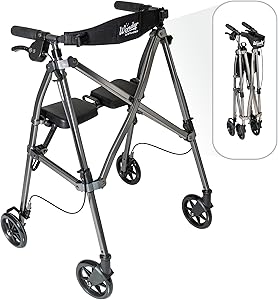
TL;DR: A bedside commode gives seniors safe, dignified toilet access during the night or recovery periods without the danger of a long walk to the bathroom. The best models are sturdy, easy to clean, height-adjustable, and support 300+ lbs. Look for removable buckets with tight-fitting lids to control odor. Best pick: ASIN B001HP7AQE.
Best Bedside Commode for Seniors: Safe, Dignified Nighttime Toilet Access
Nighttime bathroom trips are among the highest-risk moments for elderly adults. Falls in the dark — on cold floors, with impaired balance, during the groggy transition from deep sleep — account for a disproportionate share of serious injuries in older adults living at home. A bedside commode for seniors eliminates that overnight journey entirely, keeping the toilet within arm’s reach and dramatically reducing fall risk during the hours when it is highest.
As an Amazon Associate we earn from qualifying purchases.

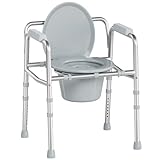


Beyond fall prevention, commodes serve an important role during post-surgical recovery, illness, or any period when a loved one’s mobility is temporarily reduced. This guide helps caregivers and seniors choose the right commode with confidence.
🛒 Best Price Today on Amazon
Prime members get fast, free shipping on everything above, plus member-only deals. New members get a 30-day free trial — cancel anytime.
Start 30-Day Prime Free Trial →See Today’s Amazon DealsTop Pick: Bedside Commode for Seniors


As an Amazon Associate we earn from qualifying purchases. Product prices and availability are accurate as of the date/time indicated.


As an Amazon Associate we earn from qualifying purchases. Product prices and availability are accurate as of the date/time indicated.
As an Amazon Associate we earn from qualifying purchases. Product prices and availability are accurate as of the date/time indicated.
Who Benefits Most from a Bedside Commode?
Commodes are appropriate for a wide range of situations that caregivers encounter. Understanding which scenario applies to your loved one helps narrow the right product category.
- Post-surgery recovery: Hip replacement, knee replacement, and abdominal surgery often restrict mobility for weeks. A commode placed beside the bed prevents the straining and bending that can compromise a fresh surgical repair.
- Nighttime incontinence urgency: Seniors with overactive bladder or limited mobility cannot always reach a distant bathroom in time. A nearby commode removes the time pressure entirely.
- General fall prevention: Any elderly adult who uses a walker or cane, has had a previous fall, or takes medications that affect balance benefits from eliminating unnecessary nighttime navigation.
- Hospice and end-of-life care: Commodes are a standard comfort item in palliative care, preserving dignity when reaching a full bathroom is no longer realistic.
If the senior already uses a raised toilet seat during the day, a bedside commode functions as the nighttime complement. Our guide to raised toilet seats with arms covers daytime bathroom modifications that pair well with a bedside unit.
Specifications Comparison
| Feature | What to Look For | Why It Matters |
|---|---|---|
| Weight capacity | 300 lbs standard; 400+ lbs bariatric | Undercapacity creates structural risk; always exceed the user’s weight by a safety margin |
| Height adjustment | Telescoping legs, 17–21 inch seat height range | Correct seat height (matching the user’s knee height) allows safe sit-to-stand transfers |
| Armrest design | Padded, fixed or removable on one side | Padded armrests protect fragile skin; removable side aids lateral transfer from wheelchair or bed |
| Bucket capacity | 7+ liters with splash guard | Larger buckets require less frequent emptying; splash guards reduce odor and cleanup effort |
| Lid fit | Tight-fitting lid included | A secure lid controls odor between emptying cycles — critical in a bedroom setting |
| Frame material | Powder-coated steel or aluminum | Steel is heavier but more rigid; aluminum is lighter for repositioning |
| Folding | Tool-free folding for travel or storage | Useful for caregivers managing multiple care settings or traveling with a senior |
Odor Management: The Concern Caregivers Don’t Say Out Loud
The most common reason families hesitate to place a commode in a bedroom is odor. It is an entirely legitimate concern and one that product selection can largely solve.
Look for a commode that includes a tight-fitting bucket lid, not just a loose-fitting cover. Add a small amount of commode deodorizing solution to the bucket before use — these enzyme-based products neutralize odor rather than masking it with fragrance. A 2-gallon resealable liner bag inside the bucket also simplifies cleaning significantly; simply remove, seal, and dispose of the liner rather than carrying a liquid-filled bucket to the bathroom.
Empty and rinse the bucket each morning as part of a consistent care routine. A clean commode with a proper lid and deodorizing solution produces minimal odor in normal use — far less than many caregivers expect before trying the setup.
Positioning the Commode Correctly
Placement matters as much as the commode itself. Follow these positioning principles:
- Position beside the dominant-side edge of the bed so the senior can swing their legs out and stand in one smooth motion, rather than pivoting across the bed.
- Ensure the commode seat height matches the bed height. When sitting on the commode, the senior’s hips should be at or slightly above knee level — this is the biomechanically easiest position for standing up safely.
- Keep a path clear on all sides. Leave at least 18 inches of clear floor around the commode. Remove loose rugs, cords, and any clutter between the bed and the commode.
- Place a motion-sensor night light nearby so the commode is always visible in the dark. See our roundup of motion sensor night lights for seniors for plug-in and battery options that activate automatically.
Commode vs. Raised Toilet Seat vs. Toilet Safety Frame
These three products solve related but different problems. Understanding the distinction prevents caregivers from buying the wrong item.
A bedside commode is a freestanding portable toilet that can be placed anywhere in the home. It is the right choice when the senior cannot safely reach the bathroom — especially at night or during recovery.
A raised toilet seat mounts on an existing toilet and increases seat height, making sit-to-stand transfers easier. It requires a trip to the bathroom and does not function independently.
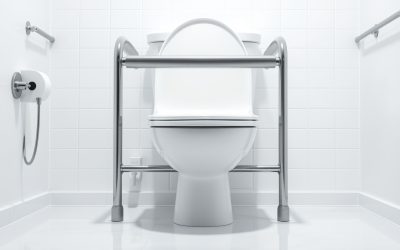
A toilet safety frame attaches beside or over an existing toilet to provide armrest support. Again, it requires reaching the bathroom first.
Many seniors use all three — the commode overnight, and the raised seat with safety frame during daytime bathroom visits. Our bathroom safety essentials guide covers the full picture of modifications that work together.
Frequently Asked Questions
How do I clean a bedside commode properly?
Empty the bucket into the toilet, rinse with water, and clean the interior with a disinfectant spray or wipe. Wipe down the frame, seat, and armrests with disinfectant daily. Deep clean the bucket weekly with a dilute bleach solution (1 tablespoon bleach per gallon of water), let it sit 5 minutes, then rinse thoroughly. Using disposable liner bags significantly reduces the effort and contact required for routine cleaning.
Can a bedside commode be used as a toilet riser over a regular toilet?
Yes. Most bedside commodes are designed to function in two configurations: as a standalone bedside unit with the bucket in place, or as a raised toilet seat with arms by positioning the frame over an existing toilet and removing the bucket. This dual-use design makes them considerably more versatile than a standard raised toilet seat alone.
What weight capacity do I need for a bariatric senior?
Standard commodes support 250–300 lbs. For seniors over 300 lbs, look specifically for bariatric commodes rated at 400–500 lbs with wider seating surfaces (20+ inches seat width). The frame gauge and leg construction are reinforced on bariatric models — do not attempt to use a standard commode over its rated capacity, as frame failure creates a fall risk far greater than the problem you are trying to solve.
Does Medicare or insurance cover a bedside commode?
Medicare Part B may cover a bedside commode as durable medical equipment (DME) when a physician documents medical necessity — typically post-surgery, severe mobility impairment, or a condition that makes bathroom access unsafe. The commode must be obtained from a Medicare-enrolled DME supplier. Coverage is generally 80% of the approved amount after the deductible. Contact your physician’s office for the documentation process and verify supplier enrollment before purchasing.
How do I encourage a senior who is embarrassed about using a commode?
Embarrassment is the most common adoption barrier. Frame the conversation around fall safety rather than incontinence — emphasize that a nighttime fall is far more disruptive and undignified than using a bedside commode. If appropriate, share that commodes are standard medical equipment in hospitals and rehabilitation centers, not just home products. Giving the senior ownership of the decision — letting them choose the model, the placement, and the care routine — also significantly increases acceptance.
Bottom Line for Caregivers
A bedside commode for seniors is one of the most practical, evidence-backed fall prevention tools available for elderly adults living at home. Select a model with height adjustability matching the user’s knee height, padded armrests, a tight-fitting bucket lid, and a weight capacity that exceeds the user’s weight by at least 50 lbs. Add a motion-sensor night light and a clear path from the bed, and you have meaningfully reduced one of the highest-risk moments in a senior’s daily routine.
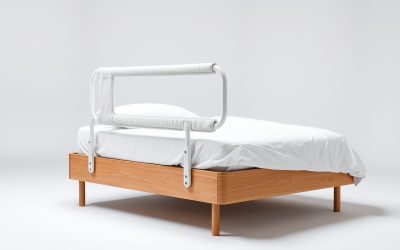
For caregivers building a comprehensive home safety setup, also review our guides on bed rails for fall prevention and walker vs. rollator for senior mobility.
Related Reviews & Guides




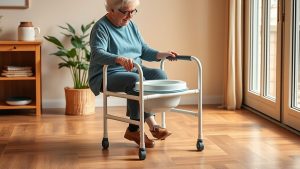
11 Best Portable Commode Chairs for Elderly: Convenient & Dignified

The Aging-in-Place Bathroom Remodel Checklist