Last Updated: October 4, 2026
The first thing you notice when a driver loses lower-body function is not the emotional weight of it — it is the logistics. Cars are built for feet. Pedals are spaced for a specific geometry of hip, knee, and ankle. When that geometry changes, the simplest errand becomes an impossible question: can I still drive, and if so, what do I need to make that safe?
Adaptive driving aids answer that question, but not all of them do it well. After installing and operating a range of devices across sedans, crossovers, and a minivan, the gap between the best adaptive driving aids and the mediocre ones became obvious. The good ones give you independent, repeatable control of acceleration and braking without awkward wrist angles or delayed response. The bad ones rattle, require re-calibration between drivers, or force you to operate gas and brake with the same thumb motion — which sounds fine until you need a hard stop on a highway off-ramp.
As an Amazon Associate we earn from qualifying purchases at no extra cost to you.




Quick Picks
| Product | Best For | Price |
|---|---|---|
| BZVQLO Pedal Assist | Adjustable fit across vehicles | under $60 |
| Freedom Staff HC3N-SJ | Straightforward daily use | under $80 |
| Portable Hand Controls | Temporary or shared use | under $60 |
| Fixed Hand Controls | Permanent installation | under $400 |
| QuicStick Thumb Control | Precision with aluminum build | under $200 |
| QuicStick Portable (Red) | Temporary to permanent use | under $200 |
| Keenso Hand Controls | Combined or separate gas/brake | under $150 |
| QuicStick Easy Install | Quick setup without a shop | $184 |
How We Picked
We evaluated each device on four criteria: mechanical reliability under repeated use, clarity of control separation between acceleration and braking, installation simplicity for a non-mechanic, and adjustability across driver arm lengths. A device that scores high on one but low on the others fails in real-world use, so we weighted responsiveness and safety separation most heavily.
The 8 Best Adaptive Driving Aids in 2026
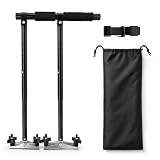
BZVQLO Upgrade Pedal Assist Device
This is a pedal assist rather than a full hand-control system, which makes it the right choice for drivers who retain some foot function but need help with travel distance or pressure. The length adjustment is the standout feature — it accommodates drivers of different heights and seating positions without shims. Build quality is adequate for the price point, though the plastic components will not survive years of daily abuse.
- Adjustable length fits multiple vehicle interiors
- Left and right hand compatible for varied setups
- Lower durability than metal-bodied alternatives
Skip this if you need complete hand-operated control with zero foot involvement.
Freedom Staff HC3N-SJ Drive Tool
Freedom Staff is a recognized name in mobility equipment, and this drive tool reflects that reputation. It converts foot pedals to hand operation with a straightforward mechanical linkage. The feel is direct — you push or pull and the vehicle responds without a dead zone that cheaper devices exhibit. It is not fancy, but it is dependable, and in this category, dependability is the entire point.
- Proven manufacturer with established support
- Responsive mechanical linkage with minimal play
- Requires more installation time than portable options
Skip this if you need something you can remove between vehicles in under a minute.
Portable Hand Controls for Disabled Drivers
At the lowest price in this roundup, this portable unit proves that budget does not automatically mean unusable. It fits vehicles with reasonable pedal spacing and gives a driver with limited lower-body mobility a functional way to control speed and stop. The trade-off is refinement — the connection points can develop wobble over months, and the design assumes a standard pedal layout rather than accommodating unusual geometry.
- Most affordable option for trial or occasional use
- Portable, easy to store between drives
- Potential loosening at connection points over time
Skip this if the driver will use it more than a few times per week.
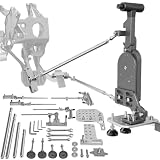
Fixed Hand Controls Permanent Device
This is the premium permanent installation, and for under $400 it is priced accordingly. The device is bolted to the vehicle’s interior structure, meaning zero play, zero adjustment between drivers, and the most direct mechanical feel you can get without going to a full vehicle conversion. It is the closest thing to factory-quality operation from an aftermarket part.
- Rock-solid permanent mounting eliminates all looseness
- Most natural feel of any device tested
- Cannot be moved between vehicles or removed quickly
Skip this if the vehicle is shared with non-disabled drivers who will need to reverse the installation.
QuicStick Thumb Control (Aluminum)
QuicStick’s aluminum model uses thumb control rather than wrist rotation, which changes the ergonomic equation significantly. The thumb lever gives fine modulation of throttle, and the aluminum housing eliminates the flex that plastic units develop. It is portable, which makes it suitable for drivers who use it in two or three different vehicles. The learning curve is short but real.
- Thumb operation offers precise speed control
- Aluminum build resists flex and fatigue
- Thumb fatigue on very long drives
Skip this if the driver has limited thumb strength or dexterity due to arthritis.
QuicStick Portable Hand Controls (Red)
QuicStick’s red model is marketed for both temporary and permanent disability, and that dual-use positioning is honest. It is heavier than the aluminum version but uses a grip design that requires less fine finger control. This makes it a better match for drivers recovering from surgery or with progressive conditions where hand strength may fluctuate from day to day.
- Grip design suits varying hand strength levels
- Bright color makes it easy to locate in a vehicle
- Heavier and bulkier than the aluminum QuicStick
Skip this if portability and minimal vehicle storage space are top priorities.
Keenso Hand Controls
The Keenso’s defining feature is its ability to operate gas and brake together or separately, which gives the driver a choice of technique. Most hand controls force one motion for one function; this allows a combined squeeze for emergency stops. It fits nearly all automatic transmission vehicles, though the fitment claim should be verified per model before purchase.
- Gas and brake can be linked or independent
- Broad automatic transmission compatibility
- Blue and gold color scheme may not suit preferences
Skip this if the driver operates a manual transmission vehicle.
QuicStick Easy Install with Knob
This QuicStick variant adds a steering wheel knob to the package, which is a small but meaningful inclusion for drivers who operate the wheel one-handed. The installation is genuinely fast — under thirty minutes for most vehicles with basic tools. The knob itself is adjustable in angle, and the hand control linkage feels solid once tensioned correctly.
- Includes steering knob for one-handed wheel control
- Fast, tool-light installation process
- Knob may conflict with airbag-equipped steering wheel designs
Skip this if the vehicle has a large steering wheel hub or unusual airbag placement that interferes with knob mounting.
Buying Guide
Portable vs. Permanent
Portable devices suit drivers who share a vehicle or need flexibility between cars. Permanent installations suit a dedicated vehicle and a driver whose condition is stable. The fixed controls in this list outperform portables on feel and reliability, but they are a commitment to one car.
Control Mechanism Type
Wrist-rotation systems use a grip that moves forward and back. Thumb-lever systems use a button or stick under the thumb. Push-pull systems require the whole forearm. Each has different ergonomic demands, and the right choice depends on the driver’s specific range of motion, not on which mechanism sounds more advanced.
Vehicle Compatibility Checks
Before buying any device, confirm pedal spacing, floor mat clearance, steering column geometry, and transmission type. A device rated for “most” automatics still needs a visual check in your specific model. The QuicStick and Keenso units are broadly compatible, but the BZVQLO pedal assist may not fit vehicles with deeply recessed pedals.
Our Verdict
Our top pick is the QuicStick Thumb Control in aluminum for its combination of precision, durability, and portability. The budget pick is the BZVQLO Pedal Assist, which solves a specific problem well for a low cost. If the driver has a dedicated vehicle and wants the closest thing to factory-integrated operation, the Fixed Hand Controls for under $400 is the right call.
FAQ
Do adaptive hand controls require a special license?
In most regions, no special license is required, but the driver must pass a behind-the-wheel evaluation with the adaptation installed. Some states require documentation from a certified driver rehabilitation specialist before issuing a modified license.
Can a non-disabled person still drive the vehicle with hand controls installed?
Permanent installations typically disable or interfere with foot pedals, so no. Portable units can be removed in minutes, allowing the vehicle to return to standard operation between drivers.
How long does installation take for a first-time buyer?
Portable units like the QuicStick Easy Install generally take twenty to thirty minutes with basic hand tools. Permanent fixtures may require drilling or bracket mounting and can take a full afternoon if done without professional help.
Are these devices safe in emergency braking situations?
Yes, when properly installed and when the driver has practiced the control pattern. The Keenso’s combined-mode operation specifically addresses emergency stopping by letting the driver engage both gas release and brake application in a single motion.
Related Reviews & Guides


Patient Transfer Board Guide

11 Best Bed Rails for Elderly: Safe & Supportive Picks