Last Updated: November 19, 2026
- Why a Quality Walking Cane Matters for Seniors
- Top Walking Cane Picks for 2026
- How to Choose and Size a Walking Cane
- Caring for Your Walking Cane
- How the Pivoting Base Actually Changes the Way a Cane Supports You
- Pivoting-Base Canes vs Traditional Straight Canes: What Actually Changes
- Is a Pivoting-Base Cane Durable Enough for Daily Use?
- Common Mistakes When Choosing a Pivoting-Base Walking Cane
- Is Upgrading to a Pivoting-Base Cane Worth It?
- How the Four-Point Pivoting Base Actually Works
- What Owners Commonly Report About Comfort and Noise
- Is a Pivoting-Base Cane Safe on Stairs and Uneven Ground?
- Frequently Asked Questions
- Related Articles
- Related Guides
A good walking cane can be the difference between staying homebound and confidently venturing out, and the HurryCane has become one of the most recognized names in senior mobility for good reason. Its pivoting base and self-standing design address common frustrations that older walkers face with traditional straight canes. In this 2026 guide, we compare the best HurryCane walking cane models alongside worthy alternatives so you can find the steady, dependable support that fits your daily life.
As an Amazon Associate I earn from qualifying purchases.
As an Amazon Associate we earn from qualifying purchases at no extra cost to you.




Prime
Best Seller
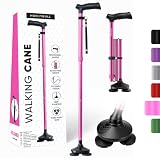
Medline Offset Folding Cane, 4-Point Base with Cushioned Gel Handle, Supports up to 350 lbs, Black
Prime
Editor's Pick
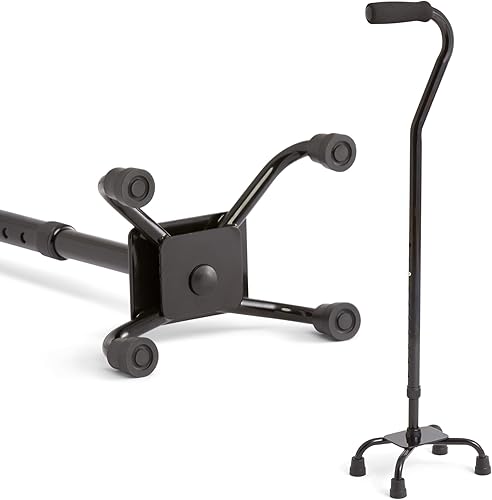
Medline Aluminum Quad Cane with Small Base, 300 lb Capacity, for Balance, Knee Injuries, Leg Surgery Recovery & Mobility, Portable, Sturdy Walking Aid for Seniors & Adults

Prime
Limited Time
Medline Aluminum Quad Cane with Large Base for Balance, Knee Injuries, Leg Surgery Recovery & Mobility, Portable, Lightweight Walking Aid for Seniors & Adults


🛒 Best Price Today on Amazon
Prime members get fast, free shipping on everything above, plus member-only deals. New members get a 30-day free trial — cancel anytime.
Why a Quality Walking Cane Matters for Seniors
The right walking cane does far more than offer something to lean on; it redistributes weight, improves balance, and gives the user a reassuring sense of control on uneven ground. A poorly chosen cane, on the other hand, can actually increase fall risk if it is the wrong height or tips over easily. The HurryCane’s signature pivoting foot keeps the base flat against the ground through each step, and its ability to stand on its own means no more bending down to retrieve a fallen cane. For a broader look at support options, see our guide to mobility aids for elderly users.
| Product | Best For | Standout Feature | Rating |
|---|---|---|---|
| HurryCane Freedom Edition | Everyday all-around use | Self-standing pivot base | 4.8/5 |
| HurryCane Deluxe | Premium comfort | Cushioned ergonomic grip | 4.7/5 |
| Medline Offset Folding Cane | Budget-conscious buyers | Simple reliable fold | 4.5/5 |
| Vive Quad Cane | Maximum stability | Four-point wide base | 4.6/5 |
| Carex Derby Handle Cane | Arthritic hands | Wide comfort handle | 4.4/5 |
Top Walking Cane Picks for 2026
Below we break down our favorite HurryCane models and a few strong alternatives, each suited to a different type of user and need.
HurryCane Freedom Edition — Best Overall Walking Cane
This is the flagship model that made the brand famous, featuring a three-point pivoting tip that adapts to your stride and terrain. It folds into three sections and stands upright on its own, so it is always within easy reach. Some first-time users need a day to trust the flexible base, but nearly everyone comes to appreciate the natural walking rhythm it allows.
HurryCane Deluxe — Best for Comfort
Building on the Freedom Edition, the Deluxe adds a softer, contoured grip that reduces hand fatigue during longer walks. It retains the same pivoting base and folding convenience. It sits at a slightly higher price point, but for anyone who uses their cane for hours at a time, the added comfort is a worthwhile investment. Pair it with our tips on preventing wrist strain.
Medline Offset Folding Cane — Best Budget Choice
For those who want a dependable folding cane without extra features, this offset-handle model delivers solid support at a friendly price. It adjusts easily and packs down small for travel. It lacks the self-standing pivot base of the HurryCane, so it will fall over if leaned against a wall, but for occasional use it is a fine value.
Vive Quad Cane — Best for Maximum Stability
When extra steadiness is the top priority, this quad cane’s four-point base provides a broad, planted footprint that stands completely on its own. It is ideal for those recovering from a stroke or with significant balance concerns. The trade-off is added weight and bulk, which can feel cumbersome on stairs or in tight spaces.
Carex Derby Handle Cane — Best for Arthritis
The wide, rounded derby handle spreads pressure across the palm, making it far kinder to arthritic or sensitive hands than a narrow grip. The classic wooden or aluminum designs look elegant too. It is a fixed-length or single-adjustment cane without pivoting features, so it suits users who want simplicity and comfort over advanced functionality.
HurryCane Adjustable Travel Model — Best for Portability
This lighter travel-focused version folds compactly enough to slip into a bag or airplane overhead bin, making it a favorite for seniors who love to get out and about. It keeps the pivoting tip and quick-fold design. It has a slightly lower weight capacity than the standard models, so heavier users should confirm the specs before purchasing.
How to Choose and Size a Walking Cane
Proper sizing is the most important step in choosing any walking cane. Stand upright in your everyday shoes with arms relaxed at your sides; the top of the cane handle should reach the crease of your wrist, allowing your elbow to bend at a comfortable fifteen to twenty degrees when gripping it. A cane that is too tall forces the shoulder up and strains the arm, while one too short causes hunching. Most HurryCane models adjust easily across a wide height range, which our cane sizing guide explains in detail. Also consider grip shape based on hand comfort, and choose a folding model if you travel or need to stow the cane in a car or restaurant. Finally, inspect the rubber tip regularly, as a worn tip loses traction and should be replaced promptly.
Caring for Your Walking Cane
A little maintenance keeps a walking cane safe and reliable for years. Wipe down the shaft and handle periodically, and check that all folding joints lock firmly into place before each use. The pivoting base tips are the most wear-prone part, so examine them for cracks or smoothing and swap them out when the tread thins. Store the cane upright and dry to prevent any internal corrosion of the folding cable. If you also use other equipment around the house, our overview of bathroom grab bars and safety rails pairs naturally with a good cane to create a fully supported daily routine that keeps you moving with confidence.
How the Pivoting Base Actually Changes the Way a Cane Supports You
A standard cane puts your entire weight through a single rubber tip, so the moment that tip lands on a slope, a curb edge, or an uneven paver, the shaft wobbles and the hand has to correct for it. A pivoting quad-base design swaps that single point for a small platform of three or four legs mounted on a hinge that tilts independently of the shaft. As the base meets the ground, the hinge lets the legs settle flat even when the cane itself is held at an angle, so the user feels a stable platform rather than a single point of contact. Because the base can find its own footing, the cane can also stay upright on its own when set down, which matters most for anyone who needs both hands free at a sink, a checkout counter, or a car door.
Pivoting-Base Canes vs Traditional Straight Canes: What Actually Changes
A traditional single-tip cane is lighter, narrower, and easier to carry through a tight doorway or a crowded aisle, but it has to be leaned against a wall or furniture to stay put, and it offers very little correction if the tip lands unevenly. A pivoting quad-base cane trades some of that compactness for a wider footprint and a slightly heavier head, in exchange for self-standing convenience and better contact on ramps, grass, and gravel. The base also spreads weight across more contact points, which owners commonly report as a steadier feel on wet tile or uneven sidewalk slabs than a single rubber tip provides. The trade-off shows up indoors: the wider base can catch on narrow hallway furniture or stairs with shallow treads, so it is not automatically the better choice in every home layout.
Is a Pivoting-Base Cane Durable Enough for Daily Use?
Most aluminum-shaft models in this category are rated well above typical adult body weight, with several listed support capacities in the 300 to 350 lb range, which gives a wide safety margin for day-to-day leaning and weight transfer. The parts that see the most wear are not the shaft but the moving pieces: the pivot hinge at the base, the rubber feet underneath each leg, and the folding joints on collapsible models. Owners commonly report that the rubber feet are the first thing to need replacing after regular outdoor use, since grit and gravel wear down the tread faster than the cushioned grip at the top wears out. A cane used daily on pavement should have its feet checked every few months; one used mostly indoors on carpet or hardwood will see that wear far more slowly.
Common Mistakes When Choosing a Pivoting-Base Walking Cane
- Buying before measuring height. A cane that is even an inch too tall or too short changes posture and shifts weight unevenly, which defeats the stability benefit of the base.
- Ignoring the weight rating. Capacities vary by model; checking the stated limit matters more for a heavier-set user than for someone comparing cushioned grips.
- Choosing the narrowest base for icy or wet conditions. A wider base generally resists tipping better outdoors, while a narrower base is easier to maneuver indoors.
- Not testing the folding latch before relying on it daily. A latch that does not seat firmly can allow unexpected collapse under load.
- Assuming every quad-base model behaves the same on stairs. Multi-point bases are designed for flat or gently sloped ground, not for placement on a single stair tread.
Is Upgrading to a Pivoting-Base Cane Worth It?
The upgrade pays off most clearly for anyone who regularly crosses uneven terrain, needs to set the cane down and use both hands, or has noticed a standard cane sliding or tipping on smooth or wet flooring. It is a smaller advantage for someone who walks almost entirely indoors on flat, dry surfaces and mainly wants the lightest, narrowest option for getting through doorways and tight spaces. In that narrower-use case, a conventional offset-handle cane is still a reasonable and often lower-cost choice, and the self-standing feature of a pivoting base may never come into play.
How the Four-Point Pivoting Base Actually Works
The signature feature of a pivoting-base cane is a small base fitted with several short, independent legs instead of one rigid tip. As the cane tilts slightly off-vertical during a normal stride, the base rocks on its pivot point and the legs spread to meet the ground, so the cane keeps multiple points of contact even when it is not held perfectly straight. A traditional single-tip cane only grips reliably when it lands flat, which is one reason pivoting bases are marketed toward people who walk at an angle or on sloped surfaces.
The trade-off is a slightly wider footprint at the base, which some users notice when storing the cane next to furniture or folding it for a bag. Manufacturers generally recommend checking the rubber feet for wear every few months, since the pivot mechanism depends on all of them keeping consistent grip.
What Owners Commonly Report About Comfort and Noise
Owners of pivoting-base canes commonly report that an ergonomic handle reduces wrist strain compared with a plain curved handle, particularly for people with arthritis in the hand or wrist. The trade-off some mention is a faint clicking or rocking sound as the base articulates on hard flooring, which is the mechanism working as designed rather than a defect, though it can take getting used to.
Comfort also depends heavily on correct height adjustment. A cane set too high pushes the shoulder up with every step, and one set too low forces a forward lean, so owners who follow the standard wrist-crease height guideline tend to report fewer complaints than those who guess at the setting.
Is a Pivoting-Base Cane Safe on Stairs and Uneven Ground?
Pivoting bases are generally recommended for flat or gently sloped ground, where the independent legs can spread and settle. On stairs, most manufacturer guidance suggests using the handrail as the primary support and treating the cane as secondary, since a pivoting base cannot grip a stair edge the way a single rubber tip can.
On gravel, thick carpet, or soft grass, the small individual feet can sink or catch unevenly, so some users switch to a single-tip cane for yard work and keep the pivoting model for sidewalks and indoor use. Checking that all feet are seated flat before each outing is the simplest way to avoid an unstable step.
Frequently Asked Questions
Is the HurryCane really better than a regular cane?
For many seniors, yes. The pivoting base keeps more surface contact with the ground for better traction, and the self-standing feature means the cane does not fall over and become a tripping hazard. Users who value stability and convenience generally prefer it over a traditional straight cane.
What height cane do I need?
Stand in your normal shoes with your arm hanging relaxed at your side. The cane handle should line up with the crease of your wrist, letting your elbow bend slightly when you grip it. Most HurryCane models adjust to fit a wide range of heights easily.
Can a HurryCane support heavier users?
The standard HurryCane models typically support up to around 350 pounds, which accommodates most users comfortably. If you are near that limit or want extra margin, check the specific weight capacity listed for each model, as travel versions sometimes have a lower rating.
How often should I replace the cane tip?
Inspect the rubber pivoting tip every few weeks. Replace it as soon as the tread wears smooth, develops cracks, or feels slippery on hard floors. A fresh tip is inexpensive and is essential for maintaining safe traction and preventing slips.
Related Reviews & Guides




Best Pressure Relief Mattress Topper for Seniors
Portable oxygen concentrator vs oxygen tank in 2026