Last Updated: October 4, 2026
- Watch: How to Find the Best Grab Bars for Elderly Bathroom Safety — Video Review
- Suction vs. Permanently Mounted Grab Bars
- Weight Capacity and Material
- Placement: Shower, Tub, and Toilet
- Installation and Mounting Considerations
- Grip, Texture, and Finish
- Tips for Choosing and Using Grab Bars
- Frequently Asked Questions
- Conclusion
- Related Articles
- Related Guides
- Top Pick: TAILI Grab Bars for Shower,Suction Shower Handles Rails,2 Pack,16.8",Grey
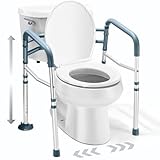
- Best Value: HOMLAND Toilet Safety Rails for Seniors, 350LB Aluminum Toilet Handle
- Premium Choice: Moen Home Care Bathroom Safety 24 Inch Stainless Steel Handicap Grab Bar for Bathtub and Shower, Heavy Duty Handle, Elderly Assistance Product with Concealed Screws, 8724
Falls in the bathroom send more older adults to the emergency room than almost any other household accident, and a wet, slippery shower floor combined with hard porcelain edges makes it one of the riskiest rooms in the house. The right grab bar, mounted correctly, gives seniors a stable point of contact for standing up, sitting down, and steadying themselves during the split-second moments when balance fails.
Not all grab bars are built the same way, though. Weight capacity, mounting method, material, and placement all matter, and choosing the wrong one can create a false sense of security. This guide breaks down what to look for in 2026, so you can pick a bar that actually holds up when it’s needed most.
As an Amazon Associate we earn from qualifying purchases at no extra cost to you.


⚡ Save on Your Next PC — Amazon Prime
Prime members get fast free shipping on the systems above, plus early access to Prime Day & Black Friday PC deals. New members get a 30-day free trial.
Watch: How to Find the Best Grab Bars for Elderly Bathroom Safety — Video Review
Suction vs. Permanently Mounted Grab Bars
The biggest decision you’ll make is whether to go with a suction-mounted bar or one that’s screwed into the wall. Each has a place, but they aren’t interchangeable in terms of safety margin.
- Suction bars like the TAILI 16.8″ or TAILI 12.2″ two-packs are renters’ best friend since they require no drilling and can be repositioned. They work best on smooth, non-porous tile and should be checked for a tight seal before every use.
- Screw-mounted bars, such as the Moen Home Care 24 Inch Stainless Steel Grab Bar, anchor directly into wall studs or blocking for a permanent, load-bearing connection that doesn’t rely on suction integrity over time.
- For anyone with significant mobility limitations or higher body weight, permanently mounted bars are the safer long-term choice.
Weight Capacity and Material
A grab bar is only as good as its ability to bear real weight under sudden, uneven pressure, not just a slow, steady lean.
- Look for a stated weight rating of at least 300 lbs; the HOMLAND Toilet Safety Rail is rated to 350 lbs, which covers most adult users with room to spare.
- Stainless steel, like the Moen 8724, resists corrosion and holds up to daily moisture exposure better than painted metal.
- Aluminum options, such as the HOMLAND rail, offer a lighter-weight alternative that’s still sturdy enough for toilet transfers.
- Avoid plastic-only construction for any bar meant to be a primary support point.
Placement: Shower, Tub, and Toilet
Where you install a grab bar matters as much as which one you buy. Different areas of the bathroom call for different bar styles and lengths.
- Inside the shower or tub, horizontal bars in the 16 to 24 inch range, like a 2 Pack 16 in Anti Slip Safety Bath Handle, give support for standing, sitting, and stepping over the tub wall.
- Near the toilet, a dedicated frame like the HOMLAND Toilet Safety Rail wraps around the bowl for sit-to-stand support without needing wall access.
- At the shower entrance, a shorter bar such as the TAILI 12.2″ pack helps with the step-in and step-out transition, which is when many falls occur.
- A vertical or angled bar near the controls adds a second grip point for reaching shampoo or adjusting water temperature.
Installation and Mounting Considerations
Even the strongest bar fails if it’s not installed properly. Screw-mounted bars need to be anchored into wall studs or reinforced blocking, not just drywall.
- The Moen 8724 features concealed screws, which hide the mounting hardware while still anchoring into the wall structure for a clean, secure fit.
- If studs aren’t available where you need support, use rated wall anchors designed for wet environments, not standard drywall anchors.
- Suction bars, including the 2 Pack 16 Inch Safety Grab Bars for Bathroom, need a flat, clean, non-textured surface to seal properly and should be tested with firm pressure before relying on them.
- Re-check suction seals weekly, since soap film and hard water buildup can weaken grip over time.
Grip, Texture, and Finish
Wet hands and slick surfaces are a bad combination, so grip texture deserves as much attention as weight rating.
- Knurled or ribbed textures channel water away from the palm and reduce slipping compared to smooth stainless finishes.
- Contrasting colors, like the grey finish on TAILI’s suction bars, make the bar easier to spot for users with low vision.
- Rounded, ergonomic diameters between 1.25 and 1.5 inches fit most hand sizes comfortably, including for users with arthritis.
Tips for Choosing and Using Grab Bars
- Install at least one bar inside the shower and one near the toilet before assuming the bathroom is fall-ready.
- Mount horizontal bars roughly 33 to 36 inches above the floor, adjusting for the user’s height.
- Test suction bars monthly by pulling firmly outward and downward to confirm the seal still holds.
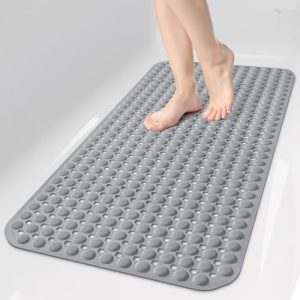
- Pair grab bars with a non-slip mat, since a stable handhold doesn’t help much on a floor that’s still slick.
Frequently Asked Questions
Are suction grab bars actually safe for seniors?
Suction bars can be safe for light support, like the 16.8″ or 12.2″ TAILI models, but they depend entirely on surface quality and seal integrity. They’re best used as a secondary aid rather than the sole support for someone with significant balance or mobility challenges.
Do grab bars need to be installed into a stud?
Permanent bars perform best when anchored into wall studs or added blocking. If studs aren’t positioned where support is needed, use anchors specifically rated for the bar’s weight capacity and for wet, tiled surfaces.
What’s the ideal length for a shower grab bar?
Most bathrooms do well with bars in the 16 to 24 inch range. Shorter 12 inch bars, like TAILI’s compact suction option, suit tight entryways, while longer 24 inch bars, such as the Moen 8724, give more reach along a tub wall.
Can one grab bar replace a full toilet safety rail?
Not really. A wall-mounted bar supports lateral movement, while a frame-style rail like the HOMLAND 350LB Toilet Safety Rail supports the sit-to-stand motion directly at the bowl. Many bathrooms benefit from having both.
Conclusion
The best grab bar setup isn’t a single product, it’s a combination: a sturdy wall-mounted bar in the shower, a toilet safety rail for sit-to-stand support, and possibly a suction bar for extra reach near controls or entryways. Match weight capacity and mounting method to the user’s needs, install with real structural support, and check the setup regularly. That combination does far more for bathroom safety in 2026 than any single bar on its own.
Related Reviews & Guides

Review: Comfortable Dining Chairs for Seniors with Back Support
8 Best Non-Slip Bath Mats for Elderly Safety in Showers