Last Updated: September 27, 2026
A transport wheelchair is a lightweight chair designed to be pushed by someone else. It has small rear wheels instead of large self-propelling wheels, folds compactly, and usually weighs less than half as much as a standard wheelchair. For families taking an older relative to appointments, shopping or on trips, it can make outings far easier. But because the user cannot move it independently, it is not the right chair for everyone. This review looks at transport chairs as a category and helps you decide if one is worth it for your situation.
What a transport chair does well
Light and compact
Most transport chairs weigh roughly 15 to 25 lb, compared with 35 to 50 lb for a standard steel wheelchair. They fold flat and fit in most car trunks. For a caregiver lifting the chair in and out of a car several times a day, that difference is huge.
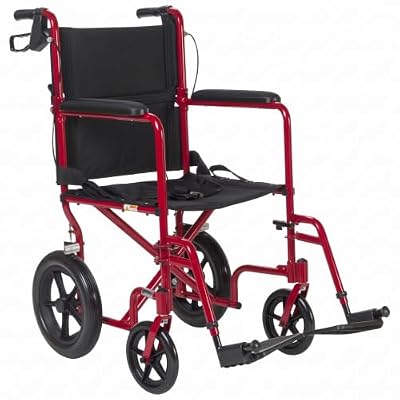
Lightweight Expedition Transport Wheelchair with Hand Brakes, Red
Included for 'Transport wheelchair review 2026 is it worth it' because the listing specifies Red, details this guide uses to compare options.
View on Amazon
Drive Medical Folding Transport Wheelchair, Swing-Away Footrest, Silver
Included for 'Transport wheelchair review 2026 is it worth it' because the listing specifies Swing-Away Footrest and Silver, details this guide uses to compare options.
View on Amazon
Medline Durable Folding Steel Transport Wheelchair with Swing-Away Footrests, 19-Inch Seat Width, Black Frame, Black Upholstery
Included for 'Transport wheelchair review 2026 is it worth it' because the listing specifies 19-Inch Seat Width and Black Frame, details this guide uses to compare options.
View on Amazon
Medline Lightweight Foldable Transport Wheelchair with Handbrakes and 12-Inch Wheels, Red Frame, Black Upholstery
Included for 'Transport wheelchair review 2026 is it worth it' because the listing specifies Red Frame and Black Upholstery, details this guide uses to compare options.
View on AmazonEasy maneuvering in tight spaces
Transport chairs are typically narrower than standard wheelchairs, often around 21 to 24 inches wide overall, which helps in doorways, restaurants and busy shops.
Affordable
Transport chairs often cost roughly $100 to $350, with lightweight aluminum models at the higher end.
Where a transport chair falls short
- The user cannot propel it. Without large rear wheels, the person sitting cannot move independently. That affects dignity and freedom.
- Small wheels struggle outdoors. Rear wheels around 8 to 12 inches catch on cracks, grass and gravel.
- Less comfortable for long periods. Seats are often thin and slung; a cushion helps.
- Caregiver needed. If the caregiver is frail or has back problems, pushing may be difficult, especially uphill.
Transport chair versus other options
| Option | Weight (approx.) | Who propels | Best for |
|---|---|---|---|
| Transport chair | 15 to 25 lb | Caregiver | Occasional outings, appointments, travel |
| Standard manual wheelchair | 35 to 50 lb | User or caregiver | Daily use, independence |
| Lightweight manual wheelchair | 30 to 36 lb | User or caregiver | Daily use, easier lifting |
| Rollator-transport chair hybrid | 20 to 25 lb | User walks, caregiver pushes when tired | Part-time walkers |
| Travel power chair | 40 to 60 lb | User | Independence away from home |
Who a transport chair is worth it for
- Seniors who can walk short distances but tire on longer outings.
- Families who take a relative to appointments and need a chair that fits in the car.
- Travelers who want a light chair for airports, cruises and sightseeing.
- Caregivers who need a backup chair to leave in the car.
Who should choose something else
- People who want to move independently; a standard or lightweight wheelchair gives them control.
- People who spend most of the day seated; a full wheelchair with proper seating is more comfortable.
- Outdoor-heavy users; small wheels make grass and gravel difficult.
Features to check
- Weight capacity: usually around 250 to 300 lb; bariatric models go higher.
- Seat width: commonly 17 to 19 inches.
- Hand brakes for the caregiver: useful on slopes.
- Swing-away footrests: make transfers easier.
- Seat belt: important on uneven surfaces.
- Wheel size: larger rear wheels (12 inches) roll better outdoors.
Coverage
Medicare Part B covers manual wheelchairs as durable medical equipment when medically necessary for use in the home. Transport chairs may be covered in some situations, but many families buy them out of pocket because of their relatively low cost. Check with a Medicare-enrolled supplier.
Tips for pushing safely
- Go down curbs backward, with the chair close to you.
- Use the brakes whenever you stop.
- Watch the footrests in doorways and elevators.
- Keep your back straight and push with your legs, not your arms.
Is a transport chair worth it?
For occasional outings and travel with a caregiver, yes; it is light, compact and affordable. For daily use, or for anyone who wants to move independently, a standard or lightweight wheelchair is usually a better investment.
Frequently asked questions
Can someone sit in a transport chair all day?
It is possible but often uncomfortable. The seat is thinner and less supportive. For long daily use, a full wheelchair with a proper cushion is better.
Will a transport chair fit in a small car trunk?
Most fold to fit in the trunk of a compact car. Measure the folded size and your trunk opening before buying.
Bottom line
A transport wheelchair is worth it for families who need a light, foldable chair for appointments, errands and travel. It is not a replacement for a full wheelchair if the user wants independence or sits for long periods.
Related Reviews & Guides





6 Best Compression Socks For Swollen Foot 2026

Best Pressure Relief Mattress Topper for Seniors