Last Updated: September 4, 2026
Why a Walker for the Elderly Is a Life-Changing Mobility Aid
When a cane no longer provides enough support, a walker for the elderly is the natural next step in maintaining safe, independent mobility. Walkers provide a wide, stable base of support on both sides of the user's body, dramatically reducing fall risk. They are particularly beneficial for seniors recovering from hip or knee replacement, those with Parkinson's disease, or anyone experiencing significant balance impairment. Standard walkers, two-wheel walkers, and four-wheel rollators each serve different mobility needs.
1. Drive Medical Deluxe Folding Walker with Wheels
Drive Medical's deluxe folding walker is a classic two-front-wheel model that allows users to push it forward smoothly rather than lifting it with each step. The rear legs have non-slip rubber tips for braking when weight is applied. It folds flat in seconds for transport or storage, and the height adjusts from 32 to 39 inches. Supports up to 300 lbs and weighs just 6 lbs — lightweight enough for seniors to handle easily.
As an Amazon Associate we earn from qualifying purchases at no extra cost to you.

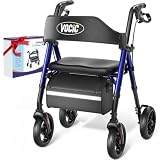


2. Hugo Elite Rollator Walker — 4-Wheel with Seat
The Hugo Elite is a premium four-wheel rollator that offers a level of comfort and functionality far beyond a standard walker. It features a padded seat for resting, a storage bag under the seat, ergonomic hand brakes, and soft-grip handles that adjust for height. The 7-inch wheels roll smoothly over tile, hardwood, and light outdoor surfaces. An ideal choice for seniors who remain active but need reliable walking support.
3. Medline Heavy-Duty Bariatric Walker — 500 lb Capacity
For larger seniors or those requiring extra structural support, Medline's bariatric walker offers heavy-duty 1.25-inch steel tubing rated to 500 lbs. The wide frame provides extra lateral stability, and the height adjusts from 32 to 39 inches to fit a range of user heights. Non-slip rubber tips on all four legs provide confident grip on any indoor surface. A reliable choice when standard walkers are insufficient.
Buying Guide: How to Choose the Right Walker for an Elderly Person
- Walker type: Standard (lift) walkers offer maximum stability; two-wheel walkers flow more naturally; rollators (four wheels) suit more active seniors.
- Weight capacity: Always verify the walker comfortably exceeds the user's body weight.
- Height adjustment: Handles should align with the user's wrist crease when standing — incorrect height causes poor posture and fatigue.
- Folding: A foldable walker is essential for anyone who travels or needs to store it in a car.
- Wheel size: Larger wheels (6-8 inches) roll more smoothly over transitions and thresholds.
- Seat: Rollators with built-in seats are ideal for seniors who fatigue quickly and need frequent rest breaks.
How to Choose the Right Walker for an Elderly Person
Choosing a walker starts with the level of support the user needs. A standard walker without wheels offers the most stability and is lifted with each step, which suits users who need maximum support and move slowly. A two-wheel walker glides more easily while still providing stability, and a four-wheel rollator with a seat and brakes is best for active seniors who can walk steadily but need to rest. Matching the style to the user’s strength and balance is the first decision.
Fit and features make the walker comfortable and safe. The handle height should let the user stand upright with a slight bend in the elbow, so adjustable handles are important. Check the weight capacity, the width to ensure it fits through doorways, and the overall weight so the user can manage it. Comfortable hand grips, sturdy construction, and easy-to-use brakes on rollator models all contribute to confident, safe walking.
Using a Walker Safely Every Day
Safe walker use begins with proper technique. The user should keep the walker about an arm’s length ahead, move it forward a short distance, then step into it rather than reaching too far. On a rollator, both brakes should be locked before sitting on the seat, and the user should back up to the seat until the legs touch it before lowering down. Keeping the body upright rather than hunching over the walker maintains better balance.
A few habits keep walking safe at home. Clear pathways of rugs, cords, and clutter, and check the walker’s rubber tips or wheels regularly for wear that could reduce grip. Make sure all height adjusters and folding mechanisms are fully locked before each use, and use the walker on level surfaces whenever possible. A physical therapist can fit the walker correctly and teach safe technique, which is especially valuable after a fall, surgery, or change in mobility.
Who Benefits Most From a Walker
Walkers suit a wide range of seniors, from those who simply need a little extra steadiness to people who rely on substantial support to move safely. Someone recovering from surgery, managing arthritis, or feeling unsteady after a fall may find a standard or two-wheel walker restores confidence for getting around the home. More active older adults who can walk well but tire over distance often prefer a four-wheel rollator with a seat for resting during errands or walks. The right choice depends on strength, balance, and where the walker will be used. Because using the wrong type, or the wrong height, can actually increase fall risk, a physical therapist’s assessment is valuable for matching the walker to the user and teaching safe technique, especially after any change in mobility.
Frequently Asked Questions
What type of walker is best for the elderly?
It depends on the user. Standard walkers give the most stability, two-wheel walkers move more easily, and four-wheel rollators with seats suit active seniors who need to rest. Match the style to strength and balance.
How do I set the right walker height?
Adjust the handles so the user can stand upright with a slight bend in the elbows while gripping the walker. Correct height supports good posture and balance.
Do rollator walkers have brakes?
Yes. Four-wheel rollators include hand brakes that should be locked before the user sits on the built-in seat to keep it from rolling.
How do I use a walker safely?
Keep the walker about an arm’s length ahead, step into it rather than reaching, stay upright, and walk on clear, level surfaces. A physical therapist can teach proper technique.
How often should I check a walker?
Inspect the rubber tips or wheels regularly for wear and confirm that height adjusters and folding locks are secure before each use to maintain stability.
Final Thoughts
A walker for the elderly is a significant aid to safe, dignified daily living. Whether you choose a basic folding walker, a two-wheel glider, or a full-featured rollator, the key is matching the device to the user's mobility level and lifestyle. A physical therapist can provide a professional fitting recommendation — and most walkers ship ready to assemble in under 15 minutes.
Related Reviews & Guides



Patient Transfer Board Guide
10 Best Ankle Support Braces for the Elderly: Stability and Pain Relief