Last Updated: September 7, 2026
- Top Pick: Adjustable Stair Climbing Assist Cane for Seniors, Half Step Stair Walker Aid for Walking Up Down, Portable Stair Lift Cane, Stability Walking Sticks – Step Stair Assist Device for Safety & Mobility
- Best Value: Stair Assist Cane & Step Cane for Seniors, Adjustable Height & Width
- Premium Choice: REHAND Adjustable Walking Cane for Seniors Adults – Ergonomic Anti-Slip Grip, 10 Height Settings (40"-49"), 350lbs Weight Capacity, Self-Standing Foldable Cane with Enhanced Anti Slip Base
🛒 Best Price Today on Amazon
Prime members get fast, free shipping on everything above, plus member-only deals. New members get a 30-day free trial — cancel anytime.
Top Size Walking Cane Correctly Step Picks for 2026
Here are our current top size walking cane correctly step picks, compared on real Amazon owner reviews, price, and features. Live prices update below.
As an Amazon Associate we earn from qualifying purchases at no extra cost to you.


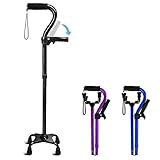

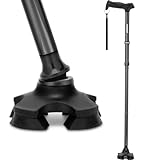

Knowing how to size a walking cane correctly is the difference between a mobility aid that genuinely prevents falls and one that quietly causes shoulder pain, wrist strain, and poor posture. A cane that is even an inch or two off forces your body to compensate with every single step — and most people take thousands of steps a day. The encouraging news is that getting the fit right takes about ten minutes, a tape measure, and a helper. This guide walks you through the measurement step by step, explains how to check the fit once the cane is in your hand, and covers grips, tips, and which side to use it on. If you are recovering from surgery, a stroke, or a fall, ask your doctor or physical therapist to confirm the fit — a professional gait assessment is always the gold standard.
Why Cane Height Matters So Much
A properly sized cane lets your elbow bend at a slight, relaxed angle — most clinicians aim for roughly 15 to 20 degrees — so your arm can absorb load smoothly as you walk. When a cane is too tall, your shoulder hikes up and your elbow flares out, which strains the neck and upper back and makes the cane wobble. When it is too short, you lean over it, shifting your center of gravity forward — exactly the posture that leads to stumbles. Researchers and physical therapists consistently point to incorrect fit and incorrect technique as two of the most common reasons canes fail to help. Pairing a well-fitted cane with regular balance exercises gives you the best of both worlds: support when you need it and a stronger base underneath you.
The Step-by-Step Sizing Method
You will need a helper, the shoes you actually walk in, and a tape measure. Follow these steps:
- Step 1 — Wear your everyday shoes. Heel height changes the measurement, so put on the supportive shoes you walk in most. If you need a pair, see our guide to the best shoes for seniors.
- Step 2 — Stand tall and relaxed. Stand on a hard floor with your arms hanging naturally at your sides, shoulders level, looking straight ahead.
- Step 3 — Find the wrist crease. Have your helper measure from the crease of your wrist (where your hand meets your forearm) straight down to the floor. That distance is your cane length.
- Step 4 — Set and lock the cane. Adjust the cane so the top of the handle sits exactly at that wrist-crease height, and make sure the locking button or collar clicks firmly into place.
- Step 5 — Check the elbow. Hold the cane at your side with the tip about two inches from your foot. Your elbow should bend slightly — around 15 to 20 degrees — not lock straight or fold sharply.
An alternative check: the handle should line up with the bump of your wrist bone, or roughly with the crease of your hip in many people. If the two methods disagree, trust the wrist-crease measurement and confirm with the elbow check.
Approximate Cane Height by User Height
The chart below offers a rough starting point. Bodies vary — arm length and posture matter as much as overall height — so always fine-tune with the wrist-crease method above rather than relying on the table alone.
| Your Height | Approximate Cane Height |
|---|---|
| 4’11” – 5’1″ | About 28–30 inches |
| 5’2″ – 5’4″ | About 30–32 inches |
| 5’5″ – 5’7″ | About 32–34 inches |
| 5’8″ – 5’10” | About 34–36 inches |
| 5’11” – 6’1″ | About 36–38 inches |
| 6’2″ and taller | About 38–40 inches |
Most adjustable aluminum canes cover this entire range, which is one reason they are usually a better first purchase than a fixed-length wooden cane. A wooden cane must be cut to length — measure twice, cut once, and remember the rubber tip adds a small amount of height.
Which Hand Should Hold the Cane?
This surprises many people: the cane goes in the hand opposite the weaker or painful leg. If your right knee is the problem, the cane belongs in your left hand. As your weak leg steps forward, the cane moves forward with it, sharing the load and mimicking the natural arm swing of walking. Using the cane on the same side as the injury narrows your base of support and twists your posture. If one side of your body is significantly weaker — after a stroke, for example — a standard cane may not offer enough support, and a hemi walker or quad cane may be the safer choice. This is exactly the situation where a physical therapist’s recommendation is worth its weight in gold.
Grips, Tips and Cane Styles
Height is the foundation, but the contact points matter too. For grips, an ergonomic or offset handle spreads pressure across the palm and is noticeably kinder to arthritic hands than a classic crook handle, which concentrates force on a small area. Foam and gel grips reduce vibration. For the bottom end, replace the rubber tip as soon as the tread wears smooth — a worn tip on a wet floor is genuinely dangerous. Quad tips (four small feet) add stability and let the cane stand on its own, at the cost of a little weight. If you are choosing a new cane from scratch, our complete walking cane guide compares the main styles in depth, and this roundup of the best walking canes for balance highlights models with wider, more stable bases.
How to Confirm the Fit Is Right
Once the cane is adjusted, take a short test walk and run through this checklist: your shoulders stay level (neither hiked up nor dropped), you stand upright rather than leaning toward the cane, the cane tip lands roughly in line with the heel of your opposite foot, and after ten minutes of walking nothing aches in your wrist, shoulder, or neck. Re-check the fit any time you change footwear style, after the cane takes a hard fall, and once or twice a year — locking collars can slip over time. Building lower-body strength alongside cane use also pays off; gentle programs like at-home strength training or tai chi for balance reduce how much you need the cane in the first place.
Frequently Asked Questions
How do I know if my cane is too tall or too short?
Too tall: your elbow juts outward, your shoulder rides up, and the cane feels like it pushes back at you. Too short: you lean forward and look down as you walk. Either way, re-measure to your wrist crease while standing tall in your walking shoes.
Should the cane handle be at hip level?
The crease of the wrist is the more reliable landmark, and in many people that happens to fall near the hip crease or the top of the thigh bone. If hip level and wrist level disagree on your body, go with the wrist-crease measurement and verify the 15–20 degree elbow bend.
Can I just buy a one-size cane online?
Adjustable canes work for most adults because they span a wide height range in half-inch or one-inch steps. Fixed-length canes must match your measurement closely, so only buy one if you know your exact cane length — or plan to have a wooden cane cut professionally.
Do I need a physical therapist to fit a cane?
You can get a good fit at home with the wrist-crease method, but a physical therapist adds real value if you have had a fall, surgery, a stroke, significant arthritis, or any neurological condition. A PT checks not just height but gait pattern, cane technique, and whether a cane is even the right device for you.
How often should I replace the cane tip?
Inspect it monthly and replace it whenever the tread looks smooth, cracked, or unevenly worn — for daily users that is often every few months. Tips are inexpensive and widely available; carrying a spare is a smart habit, especially in wet or icy seasons.
Related Reviews & Guides



Quick Picks: Best Senior Walking Stick Quad Canes
How to Choose All Terrain Mobility Scooters: What Actually Matters