Last Updated: September 13, 2026
- Why Omron Is the Most Trusted Blood Pressure Monitor Brand
- Buying Guide: Which Omron Model Is Right for You?
- What to Look for in a Home Blood Pressure Monitor
- Getting Accurate Readings at Home
- Tracking Readings and Sharing Them With Your Doctor
- Common Mistakes That Affect Your Readings
- Final Thoughts
- Related Guides
- Frequently Asked Questions
- Related Guides


Why Omron Is the Most Trusted Blood Pressure Monitor Brand
When physicians and health organizations recommend a home blood pressure monitor, Omron is almost always the brand they name. Omron has been manufacturing clinically validated blood pressure monitors for over 40 years and holds the number-one position globally in the home blood pressure monitor market. Their devices are rigorously tested for accuracy, built for ease of use, and designed with seniors in mind — featuring large displays, simple controls, and automatic inflation. Here are the top Omron models to consider.
1. Omron Silver Blood Pressure Monitor (BP5250)
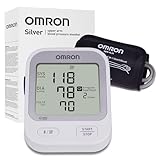
The Omron Silver is the entry point to Omron's validated lineup and delivers everything most seniors need. It stores 60 readings per user, detects irregular heartbeats, and uses an easy wrap-and-go cuff. The large digital display shows systolic, diastolic, and pulse readings simultaneously. It runs on four AA batteries and does not require Bluetooth or app connectivity — perfect for seniors who prefer simplicity.
As an Amazon Associate we earn from qualifying purchases at no extra cost to you.



2. Omron Gold Blood Pressure Monitor (BP5350)
Stepping up to the Omron Gold adds Bluetooth connectivity and app syncing via Omron Connect. It stores up to 120 readings per user and supports two users — ideal for couples. The Gold model also features advanced averaging: it automatically takes two readings 60 seconds apart and displays the average, a practice recommended by the American Heart Association for home monitoring.
3. Omron Platinum Blood Pressure Monitor (BP5450)
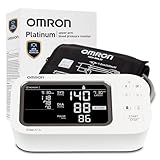
The Omron Platinum is the flagship home monitor and the most feature-rich option. Its TruRead mode takes three consecutive readings and displays the average, matching clinical measurement protocols. It stores 200 readings per user, syncs with Omron Connect, detects morning hypertension trends, and can send data directly to a doctor. The large color display includes a color-coded indicator (green/yellow/red) for immediate interpretation.
Buying Guide: Which Omron Model Is Right for You?
- Silver: Best for seniors who want simple, accurate monitoring without app complexity.
- Gold: Best for couples or seniors whose doctors want to track readings via the Omron Connect app.
- Platinum: Best for seniors with diagnosed hypertension who need clinically precise, trend-aware monitoring.
- Cuff fit: All models come with a standard adult cuff; large-arm cuffs are sold separately if needed.
- Battery vs. AC: Silver and Gold are battery-only; the Platinum can use an AC adapter (sold separately).
- Irregular heartbeat detection: All three models include this critical safety feature.
What to Look for in a Home Blood Pressure Monitor
A good home monitor is accurate, comfortable, and easy to read. The cuff is the most important part: it must fit the upper arm correctly, because a cuff that is too small or too large can skew the numbers. Check the cuff’s size range against the user’s arm measurement, and look for a wide-range or large cuff if the user has bigger arms. An upper-arm monitor is generally preferred over a wrist model for everyday reliability. Large digital displays, backlighting, and clearly labeled readings help seniors with limited vision read results at a glance, and a memory function that stores past readings makes it easy to track trends over time and share them with a doctor.
Getting Accurate Readings at Home
Even a quality monitor can give misleading numbers if it is used incorrectly. Sit quietly for about five minutes before measuring, with your back supported, feet flat on the floor, and legs uncrossed. Rest the arm on a table so the cuff sits at heart level, and position the cuff on bare skin rather than over clothing. Avoid caffeine, smoking, and exercise in the half hour beforehand, and stay still and quiet during the measurement. Taking readings at the same times each day, such as morning and evening, produces the most useful comparisons. Remember that a single reading is just a snapshot; if your numbers are consistently outside your normal range, share them with your doctor rather than adjusting any medication on your own.
Tracking Readings and Sharing Them With Your Doctor
A home monitor becomes far more valuable when its readings are recorded and reviewed over time rather than treated as one-off numbers. Many models store past results automatically, and some let multiple users keep separate histories, which is handy in a shared household. Whether the device logs readings or not, keeping a simple notebook or app record of the date, time, and result helps reveal patterns that a single measurement cannot. Bring this record to medical appointments, where it gives the doctor a fuller picture than the reading taken in the office, which can be skewed by nervousness. Note anything that might affect a result, such as a missed dose, illness, or unusual stress, so the numbers can be understood in context. Never adjust medication on your own based on home readings; instead, share consistent trends with your doctor, who can decide whether any change is needed.
Common Mistakes That Affect Your Readings
Several everyday habits can quietly throw off a blood pressure reading, so being aware of them helps you trust your numbers. Measuring over clothing, letting the arm dangle below heart level, crossing the legs, or talking during the reading can all nudge the result up or down. Using a cuff that does not fit the arm correctly is one of the most common errors, so confirm the cuff size matches the user’s arm. Taking a reading right after caffeine, smoking, exercise, or a stressful moment also skews the picture, which is why resting quietly beforehand matters. Finally, drawing conclusions from a single reading can be misleading, since blood pressure naturally varies through the day. Take a couple of readings a minute or two apart and look at the pattern over several days. If readings are consistently outside your usual range, share them with your doctor rather than reacting to any one number.
Final Thoughts
An Omron blood pressure monitor is one of the best investments a senior can make in their long-term health. Whichever model you choose — Silver, Gold, or Platinum — you are getting a clinically validated, physician-trusted device built to last. Start monitoring today and give your doctor the data they need to keep you healthier, longer.
Related Guides
- Quick Picks: Best OTC Hearing Aids and Sound Amplifiers…
- Best Pulse Oximeter for Seniors: Monitor Blood Oxygen at Home
- Best Smart Pill Organizer with App for Seniors in 2026
- Quick Picks: Best Senior Pill Organizer Weekly Dispensers
Frequently Asked Questions
How do I choose the right cuff size?
Cuff fit is the single biggest source of inaccurate home readings. Measure the circumference of your upper arm at the midpoint between shoulder and elbow, then match it to the range printed on the cuff, commonly around 9 to 17 inches for standard and wide-range models. A cuff that is too small reads high; one that is too large reads low. Larger arms need a dedicated large cuff.
Is it easy to use with limited grip or vision?
Look for a single large start button rather than menu navigation, a backlit display with tall digits, and a pre-formed cuff that slides on like a sleeve and secures with one hand. Models that store readings automatically remove the need to write numbers down. Bluetooth versions log results to a phone app, which is helpful when sharing history at appointments.
Will Medicare or insurance cover a home monitor?
Original Medicare covers ambulatory blood pressure monitoring in specific diagnostic situations, but routine home monitors are often not covered as durable medical equipment. Many Medicare Advantage plans include an over-the-counter allowance that can be spent on one, and HSA or FSA funds generally qualify. Check your plan’s benefit catalog, since the same device may be free through one plan and out of pocket under another.
Where should the cuff sit on my arm?
Place the bottom edge of the cuff about half an inch above the elbow crease with the tube running down the inside of the arm toward the middle finger. Sit with your back supported, feet flat, arm resting so the cuff is level with your heart, and rest quietly for five minutes first. This is general guidance; discuss your readings and any treatment decisions with your clinician.
How do I clean and store it?
Wipe the cuff exterior with a cloth lightly dampened with mild soapy water or a diluted disinfectant, then let it dry fully before storing; never soak the cuff or run it through a washing machine, as moisture in the bladder damages accuracy. Keep the monitor in its case away from heat, and remove batteries if it will sit unused for months.
Related Reviews & Guides





Portable Nebulizer Inhaler Senior Review

11 Best GPS Trackers for Elderly: Peace of Mind for Families