Last Updated: September 4, 2026
- Top Pick: Zacurate 500 Series Fingertip Pulse Oximeter Blood Oxygen Saturation Monitor with Silicon Cover, Batteries and Lanyard (Royal Black)
- Best Value: Fingertip Pulse Oximeter Blood Oxygen Saturation Monitor Pulse Ox, Heart Rate and Fast Spo2 Reading Oxygen Meter with OLED Screen Included Lanyard and 2 X AAA Batteries
- Premium Choice: Innovo Deluxe iP900AP Fingertip Pulse Oximeter Blood Oxygen Saturation Monitor with Alarm, Plethysmograph and Perfusion Index
Introduction
A pulse oximeter is a non-invasive device that clips onto a fingertip and measures blood oxygen saturation (SpO2) and pulse rate in seconds. For seniors with respiratory conditions, heart disease, COPD, or those recovering from COVID-19 or surgery, monitoring oxygen levels at home can detect dangerous drops before they become emergencies. Here's what to look for and the top models recommended for seniors.
Key Features to Look For
- Display Readability: A large, bright OLED display with high-contrast numbers is essential for seniors with reduced visual acuity; some models allow display rotation for different viewing angles.
- Accuracy: Look for devices that are FDA-cleared and meet ISO standards for SpO2 accuracy within ±2%, especially for readings in the 90 to 100% range.
- Alarm Function: Audible and visual alarms that trigger when SpO2 drops below a set threshold (e.g., 90%) provide an important safety safety net for seniors sleeping or resting.
- Ease of Use: A one-button design that activates immediately upon insertion of the finger makes it suitable for seniors unfamiliar with technology.
- Bluetooth: Bluetooth-enabled models sync readings to a smartphone app, allowing family members to track trends over time remotely.
Top Picks for Seniors
Wellue O2Ring Continuous Oxygen Monitor
The Wellue O2Ring is worn on the finger like a ring rather than clipped on, allowing continuous overnight monitoring without discomfort. It records SpO2 and pulse rate every 4 seconds, stores up to 16 hours of data, and syncs to a free app via Bluetooth. Vibration alerts wake the user if oxygen drops below the set threshold, making it ideal for seniors with sleep apnea or nocturnal oxygen issues. FDA-cleared and highly reviewed by users with COPD.
As an Amazon Associate we earn from qualifying purchases at no extra cost to you.


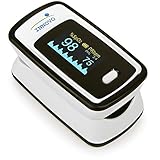


Zacurate Pro Series 500DL Fingertip Pulse Oximeter
Zacurate's 500DL is a well-reviewed, straightforward fingertip pulse oximeter with a large rotating OLED display and accurate readings within seconds. It is FDA-cleared for SpO2 measurements and includes a lanyard, carry case, and batteries. The display shows SpO2, pulse rate, and a plethysmograph waveform simultaneously. A solid choice for basic daily monitoring at a very accessible price.
Nonin Medical Onyx Vantage 9590 Fingertip Pulse Oximeter
Nonin Medical is a clinical-grade pulse oximeter manufacturer, and the Onyx Vantage 9590 is trusted by hospitals and home health professionals alike. It features PureSAT technology for accuracy even with low perfusion or motion, a clear display, and a durable housing. It's especially recommended for seniors with poor circulation, darker skin tones, or conditions that affect reading accuracy on consumer devices.
What to Look for in a Pulse Oximeter for Seniors
A fingertip pulse oximeter offers a quick, non-invasive way to check blood oxygen saturation and pulse rate at home, and a few features make one easier and more reliable for an older adult. Display clarity comes first: a bright, large-digit screen, ideally with adjustable brightness or a rotating display, lets a senior read the numbers without straining. Simple one-button operation removes confusion, and an automatic shut-off saves the battery if the device is set down. A comfortable finger opening that fits a range of finger sizes and does not pinch encourages consistent use.
Build quality and convenience round out the choice. A sturdy, well-made unit with a secure spring and clear, readable labeling tends to give more consistent results than a flimsy one. Long battery life, or easily replaced standard batteries, keeps the device ready when needed. Some models add a lanyard or carrying case to prevent drops and loss. Keep in mind that a home pulse oximeter is a wellness tool for general monitoring, not a diagnostic device; readings can be affected by many factors, so the goal is a clear, easy-to-use unit and a plan to share any concerning readings with a doctor.
Getting Accurate Readings and Knowing When to Call a Doctor
Accurate readings depend as much on technique as on the device. Before measuring, the person should sit still and rest for a few minutes, keep the hand warm and relaxed, and support it on a table rather than holding it in the air, since cold hands, movement, and a raised arm can all skew the result. Remove nail polish or artificial nails, which can interfere with the sensor, and avoid taking a reading right after activity if a resting value is wanted. Let the number settle for several seconds before reading it, and consider checking again to confirm an unexpected result.
Just as important is knowing what to do with the numbers. A home oximeter is for general monitoring and is not a substitute for medical care or professional judgment. Some readings can be inaccurate, particularly with poor circulation, certain nail or skin conditions, or a low-quality device, so a single number should be interpreted with caution. Anyone should seek prompt medical attention for symptoms like shortness of breath, chest pain, confusion, or bluish lips regardless of the reading, since how a person feels matters more than the device. It is best to ask a doctor in advance what readings or symptoms should prompt a call, and to share home measurements at appointments so they can be interpreted in context.
Related Guides
- Best Fall Detection Smartwatch for Elderly in 2026
- Best Medication Reminder Apps for Seniors and Caregivers
- Portable Nebulizer Inhaler Senior Review
- Hearing Amplifier Seniors Review
Frequently Asked Questions
How do I get an accurate pulse oximeter reading?
Rest and sit still for a few minutes, keep the hand warm and supported on a table, remove nail polish, and let the number settle for several seconds. Cold hands, movement, and a raised arm can all skew the result.
Can a pulse oximeter replace a doctor’s evaluation?
No. A home oximeter is a general wellness tool, not a diagnostic device. Readings can be inaccurate in some situations, so share results with a doctor and seek care based on symptoms, not the number alone.
What can make a pulse oximeter reading inaccurate?
Cold hands, poor circulation, movement, nail polish or artificial nails, certain skin or nail conditions, and a low-quality device can all affect accuracy. Correcting these and rechecking helps, but interpret any single reading with caution.
When should I seek medical help regardless of the reading?
Seek prompt medical attention for symptoms like shortness of breath, chest pain, confusion, or bluish lips, even if the number looks fine. Ask your doctor in advance which readings or symptoms should prompt a call.
Final Thoughts
A home pulse oximeter is an affordable, easy-to-use tool that can provide early warning of dangerous oxygen drops for seniors with respiratory or cardiovascular conditions. Regular monitoring paired with clear guidelines from a physician about when to seek medical care makes this device most effective. Always consult a healthcare provider to establish baseline SpO2 values and action thresholds appropriate for your loved one's specific condition.
Related Reviews & Guides



Quick Picks: Best Automatic Pill Dispensers with Alarm…

Blood Pressure Monitor Accuracy for Elderly