Last Updated: September 12, 2026
- Weekly vs. Monthly: Which Is Actually Better?
- Top Picks at a Glance
- What to Look for: Features That Actually Matter for Seniors
- AM/PM Organizers: When You Actually Need Them
- Automated Pill Dispensers: The Next Level
- Step-by-Step Setup Guide for Caregivers
- Pairing Pill Management with Other Safety Systems
- Frequently Asked Questions
- The Bottom Line
- Related Articles
- Related Guides
- Top Pick: 6 Times a Day, 7 Day Large Weekly Pill Organizer with Holder Tray, Vitamin, Medicine Box, Multicolor (6X a Day – 1 Pack)
- Best Value: 6 Times a Day Weekly Pill Box Organizer Case, Secure 7X Pillbox with Medication Schedule (6 Time-a-Day)
- Premium Choice: 6PCS Weekly Pill Organizer 4 Times a Day 7 Day Daily Medicine Pill Box

TL;DR: Most seniors miss doses not from forgetfulness alone — but from confusing which compartment they’re on, poor dexterity with small latches, and no visual confirmation they already took today’s pills. The right pill organizer solves all three. Guide below covers weekly vs. monthly, features worth paying for, and setup tips that actually work.


Best Pill Organizer Weekly for Seniors: How to Choose and Set Up Right
About 50% of seniors with chronic conditions don’t take medications as prescribed. The consequences range from poorly managed blood pressure to rehospitalization. Pill organizers sound like a small fix — but the research shows that simple visual systems meaningfully improve adherence when they match the person’s actual routine and physical abilities.
As an Amazon Associate we earn from qualifying purchases at no extra cost to you.


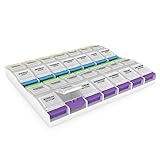


This guide is for caregivers and family members setting up medication management for an older parent — not just picking a box, but setting up a system that sticks.
🛒 Best Price Today on Amazon
Prime members get fast, free shipping on everything above, plus member-only deals. New members get a 30-day free trial — cancel anytime.
Weekly vs. Monthly: Which Is Actually Better?
| Feature | Weekly (7-day) | Monthly (28–31 day) |
|---|---|---|
| Compartments | 7–28 (with AM/PM) | 28–31 |
| Refill frequency | Weekly | Monthly |
| Easy to verify at a glance | Yes — remaining week visible | Yes — whole month visible |
| Portability | Better (smaller) | Bulky, usually stays home |
| Best for | Seniors with some independence | Caregiver fills once/month |
| Cost | $8–$25 | $15–$40 |
The real question isn’t weekly vs. monthly — it’s who fills it and how often they’re available to do so. If you live 30 minutes away and can visit weekly, a weekly organizer works. If you’re flying in once a month, a monthly organizer with a caregiver check-in system makes more sense.
Top Picks at a Glance
Best for Arthritic Hands
Look for organizers with push-button or slide-open compartments rather than pop-top lids. Large compartments (fit a fist) matter more than overall size. Brightly color-coded days reduce day-confusion errors.
Best for Complex Regimens
AM/PM/evening organizers with 3–4 daily compartments handle the multi-dose schedules common with heart disease, diabetes, and hypertension management. Look for separate removable daily pods.
Best for Independent Seniors
Automatic pill dispensers ($30–$100) with alarms and lockout features prevent double-dosing and provide auditory reminders. Worth the extra cost when a caregiver isn’t nearby daily.
What to Look for: Features That Actually Matter for Seniors
1. Compartment Opening Mechanism
This is the most important spec — and the least discussed. Standard flip-top lids require pinching and lifting, which is difficult with arthritis or reduced grip strength. Evaluate:
- Push-button release: Press down, compartment pops open. Arthritis-friendly.
- Slide-open: Moderate effort, works well for most seniors.
- Flip-top with large tab: Workable if the tab is genuinely large.
- Child-resistant latch: Avoid entirely — designed to be difficult to open.
2. Compartment Size
Seniors often take 5–10 medications daily. A compartment that fits 8–10 standard-size tablets comfortably is essential. “Extra large” in product descriptions varies wildly — look for actual dimensions in listings. Minimum useful size: roughly 1.5″ x 1.5″.
3. Day Labeling Visibility
Clear, high-contrast day labels in large print reduce the “wait, did I already take Monday’s pills?” problem. Color coding by day helps even more. Look for embossed lettering that can be felt, not just seen — useful for seniors with vision impairment.
4. Portability
If your parent leaves home for activities, a daily-pod-style organizer lets them snap off just that day’s compartment to carry. Far more practical than carrying the entire week’s supply to a bridge club.
5. Material and Durability
BPA-free plastic is standard and fine. Look for units that don’t discolor or crack after repeated weekly opening and closing. Hinges are the most common failure point — check reviews specifically for hinge durability after 6+ months of use.
AM/PM Organizers: When You Actually Need Them
An AM/PM organizer doubles the compartment count and cost. Worth it when:
- Your parent takes medications that must be separated by time (e.g., blood thinners 12 hours apart)
- They have medications that interact if taken simultaneously
- Some pills must be taken with food (morning) and others on an empty stomach (bedtime)
Not worth it when:
- All medications are once-daily — extra compartments add confusion, not clarity
- The senior finds the AM/PM labels confusing
Automated Pill Dispensers: The Next Level
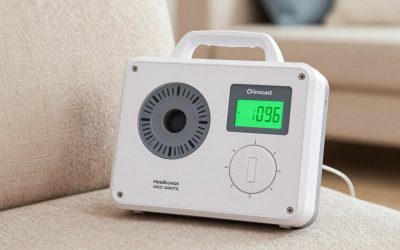
For seniors living alone with complex medication schedules, a basic pill organizer may not be sufficient. Automatic pill dispensers ($30–$300) add:
- Auditory and visual alarms at preset dose times
- Locked compartments that only open at the correct time (prevents double-dosing)
- Remote caregiver notifications when a dose is missed (on higher-end models)
The trade-off is setup complexity — filling a 28-compartment automated dispenser correctly requires careful attention and ideally a pharmacist’s guidance for a complex regimen.
Step-by-Step Setup Guide for Caregivers
Before you fill
- Get a current medication list from the pharmacist. Not from your parent’s memory. Pharmacists can print a reconciled list showing every current prescription, dose, and timing.
- Check for OTC medications. Aspirin, melatonin, vitamins — these need slots too if they’re taken regularly.
- Confirm timing with the prescribing doctor if any medications have “with food,” “on empty stomach,” or specific time-of-day requirements.
Filling the organizer
- Fill in a well-lit area with a clean, light-colored surface so dropped pills are visible.
- Fill one medication at a time across all 7 (or 28) compartments before moving to the next drug — reduces the chance of adding a double dose to one day.
- Double-check: count compartments vs. expected pill count. Seven compartments = seven pills of each once-daily medication.
- Take a photo of the filled organizer for reference.
Location matters
Place the organizer somewhere highly visible in the morning routine — next to the coffee maker, on the breakfast table, beside the morning glass of water. Out-of-sight equals out-of-mind for medication routines. Not in a cabinet. Not in the bathroom (humidity degrades pills).
Pairing Pill Management with Other Safety Systems
Medication management is one piece of a broader home safety strategy. Falls remain the leading cause of injury for seniors — and many falls are caused or worsened by medication side effects (dizziness, low blood pressure, drowsiness). See our best power lift recliner elderly for reducing the seated-to-standing fall risk that’s especially relevant for seniors on blood pressure medications.
For bathroom safety — where medication-induced dizziness contributes to a significant number of falls — review our more on bathroom safety checklist aging in place and the full ada compliant bathroom grab bars walkthrough.
Frequently Asked Questions
Is it safe to put pills in a weekly organizer?
For most medications, yes. A few exceptions: medications sensitive to light or humidity (nitroglycerin, some eye drops), anything with a “keep in original container” warning, and controlled substances in some states. When in doubt, ask the pharmacist — they know which specific formulations are sensitive.
How do I know if my parent took their pills today?
Visual check is the simplest method — if today’s compartment is empty, they were taken. For remote caregivers, smart pill dispensers with app notifications provide real-time confirmation. A simple low-tech solution: a daily check-in phone call timed to coincide with the medication routine.
What do I do if my parent double-doses?
For most common medications, a single accidental double dose is not dangerous — but call Poison Control (1-800-222-1222 in the US) or the prescribing doctor to confirm. Some medications (blood thinners, diabetes drugs, heart medications) have narrow therapeutic windows where double-dosing is genuinely dangerous. Know which of your parent’s drugs fall into this category.
What’s the best pill organizer for someone with dementia?
For moderate-to-advanced dementia, standard pill organizers are typically insufficient — the senior may not remember whether they took pills, may take from the wrong compartment, or may take all compartments at once. Locked automatic dispensers that only open at programmed times are safer. In advanced cases, a caregiver must directly supervise and administer medications.
How often should a senior’s medication list be reviewed?
At minimum annually, and whenever a new specialist is added to care. Polypharmacy (5+ medications) is common in seniors and raises interaction risk significantly. Ask for a medication reconciliation review — many pharmacies offer this service, and Medicare covers an annual comprehensive medication review with a pharmacist.
The Bottom Line
A pill organizer is only as good as the system around it: who fills it, how it’s positioned in the daily routine, whether the mechanism matches the senior’s physical abilities, and what backup exists when a dose is missed. Spend 10 minutes getting those pieces right when you first set it up — it’s worth far more than the $15 you spent on the organizer itself.
For seniors who need the next level of support beyond a basic organizer, consider pairing with a Rollator Walker Seniors Comparison for safer movement to the medication station, and a medical alert system for emergency response if a medication-related fall occurs.
Related Reviews & Guides





Remote monitoring options for aging parents in 2026

Hearing Aid Battery Size 312