Last Updated: September 7, 2026
- Top Picks at a Glance
- Why Shower Chairs Matter: The Evidence
- Shower Chair Types: Matching Chair to Bathroom
- Critical Safety Specs: What to Verify Before Buying
- Fitting a Shower Chair Correctly
- Building a Complete Bathroom Safety System
- Shower Chair Maintenance and Hygiene
- Frequently Asked Questions
- Related Articles
- Related Guides
- Top Pick: HOMLAND Shower Chair for Inside Shower with Padded Armrests and Back
- Best Value: Medline Shower Chair with Backrest and Padded Armrests – 350 lb. capacity, Bath Bench, Seat, Stool for Independent Adult, Seniors, Elderly & Disabled Patients
- Premium Choice: HOMLAND Shower Chair for Inside Shower with Removable Back, Aluminum Frame
 Shower Chair Waterproof Elderly” style=”max-width:100%;height:auto;margin-bottom:1rem” loading=”lazy”>
Shower Chair for Elderly: Buyer’s Guide to Waterproof Seating, Weight Capacity, and Bathroom Safety
Bathrooms account for a disproportionate share of fall-related injuries in older adults. The shower specifically combines three fall risk factors simultaneously: wet surfaces, temperature-related blood pressure changes, and the balance demands of standing on one leg while washing. A shower chair addresses all three by removing the standing requirement.
This guide covers shower chair types, critical safety specs, fit assessment, and how to build a complete bathroom safety system around the chair.
As an Amazon Associate we earn from qualifying purchases at no extra cost to you.


🛒 Best Price Today on Amazon
Prime members get fast, free shipping on everything above, plus member-only deals. New members get a 30-day free trial — cancel anytime.
Start 30-Day Prime Free Trial →See Today’s Amazon DealsTop Picks at a Glance

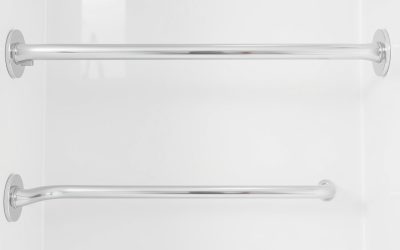
Grab Bars for Shower, 16 Inch Shower Handle, 2 Pack, Polished Nickel | Grab Bars for Bathroom, Stainless Steel, Anti-Slip Textured Grip, 1-Inch Diameter, Wall-Mounted Safety Support for Seniors

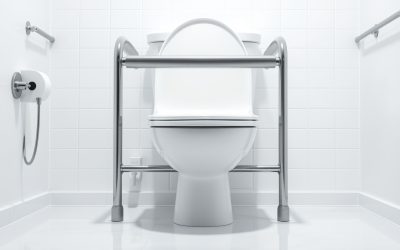
Carex 3.5 Inch Raised Toilet Seat with Arms, Elongated Toilet Seat Riser, Up to 250 lbs Capacity, Elevating & Raising Seat for Elderly & Handicap, Universal, Slip-Resistant with Padded Handles, White

soundfuse Foldable Rollator Walkers for Seniors with 16" Ergonomic Arc Seat | Sturdy Frame, Double Support Bar, 8" Wheels for All Terrain, Padded Seat, Dual Height Adjustable, Tool-Free Assembly
As an Amazon Associate we earn from qualifying purchases. Product prices and availability are accurate as of the date/time indicated.
Why Shower Chairs Matter: The Evidence
The CDC reports that each year approximately 235,000 adults 15+ are injured in bathrooms serious enough to require emergency care; adults 65+ account for the largest share. Of bathroom injuries, about 70% occur in the bathtub or shower. The intervention evidence is clear: seated bathing eliminates the primary fall mechanism—loss of balance while standing.
For caregivers assisting with bathing, a shower chair also reduces physical strain and improves the quality of care by giving the caregiver better access and the senior better stability during the process.
Shower Chair Types: Matching Chair to Bathroom
Basic Shower Stool (No Back)
Best for: Seniors with good trunk stability who need a seat for fatigue management but don’t require back support. Lighter and more compact than chairs with backs; easier to reposition in small showers.
Minimum specs: Four non-slip rubber feet, aluminum or stainless frame (not steel, which rusts), drainage holes in seat, weight capacity 250+ lbs, height-adjustable legs with tool-free adjustment.
Shower Chair with Back
Best for: Seniors with lower back weakness, post-surgical recovery, fatigue conditions (heart failure, COPD, cancer treatment), or anyone who needs torso support during a shower lasting more than 5 minutes.
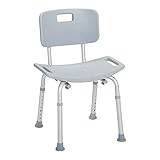
The backrest should extend to at least mid-back (12–14 inches above seat level). Cutout seat design improves hygiene care accessibility. Look for side arms if the person also needs support transferring onto the seat.
Shower Chair with Arms
Best for: Seniors with upper extremity weakness, hip or knee replacements, or anyone for whom lowering to and rising from a seat is difficult. Arms provide push-up grip points for standing and lateral stability while seated.
Verify arm height: the elbows should rest naturally (90° angle) when seated. Arms that are too low require a slumped posture; too high causes shoulder elevation and shoulder strain.
Transfer Bench
Best for: Seniors who cannot step over a bathtub wall safely, including wheelchair users or those with severe balance or mobility impairment. A transfer bench straddles the tub wall—the person sits on the outside portion and slides across into the tub.
This is the highest-function bathroom seating option and significantly more expensive ($80–$200) than a basic shower chair ($25–$80). It eliminates the tub entry step entirely. Requires permanent installation next to the tub rim and space for the bench to extend beyond the tub edge.
Teak/Wood Shower Bench
Best for: Walk-in showers where the bench is permanently installed or semi-permanent. Teak is naturally water-resistant and aesthetically cleaner than plastic. Drawbacks: heavier, requires periodic oiling to maintain water resistance, and slats create drainage but also create pressure points for thin skin.
Critical Safety Specs: What to Verify Before Buying
| Spec | Minimum | Preferred |
|---|---|---|
| Weight capacity | 250 lbs | 300–500 lbs (bariatric available) |
| Non-slip feet | Rubber tips on all 4 legs | Suction-cup feet for wet tile; removable for cleaning |
| Seat height range | 16–20 in (adjustable) | 14–21 in (accommodates more body types) |
| Frame material | Aluminum (rust-proof) | Anodized aluminum + plastic seat; no steel components |
| Seat drainage | Holes in plastic seat | Open slat design for maximum drainage |
| Seat surface | Smooth plastic | Textured/non-slip surface or removable non-slip pad |
| Assembly | Tool-free | Tool-free, intuitive (caregiver can assemble without instructions) |
| ANSI/BIFMA or similar testing | Listed on product page | Listed + third-party verified |
Fitting a Shower Chair Correctly
An incorrectly fitted shower chair creates different hazards than no chair. Correct fit means:
- Seat height: When seated, feet should rest flat on the shower floor, with knees at or slightly below hip level. If the person’s feet dangle, the chair is too high—dangerous because it makes standing harder and changes center of gravity.
- Seat depth: At least 14 inches front to back. The person should be able to sit fully back against the backrest (if present) without their legs being unsupported.
- Seat width: Standard seats are 15–17 inches wide. For larger individuals, verify bariatric options (20–24 inches wide) to prevent hip contact with armrests or seat edges, which creates pressure injury risk.
- Shower size: The chair must fit inside the shower with the door able to close, with clearance for water to drain. Measure your shower interior (depth × width) before purchasing. Most standard shower chairs are 16–20 inches wide × 14–17 inches deep.
Building a Complete Bathroom Safety System
A shower chair addresses in-shower fall risk. The bathroom has multiple additional hazard points. A complete setup addresses entry, toilet transfer, and wet-floor navigation.
Grab Bars: Shower Entry and Walls
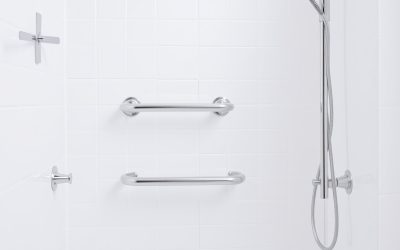
Grab bars should be installed at the shower entry point (for stepping in and out), on the shower wall at seated height for stabilizing while sitting and standing, and at the toilet. ADA standard for shower grab bars: horizontal bar at 33–36 inches height on the long shower wall, angled bar on the entry side.
Ravinte Grab Bars (B0BZ41GW6Y, $19.99) are ANSI-rated 304 stainless steel with 500 lb load rating, available in 12–36 inch lengths. Must be anchored into wall studs or with appropriate toggle anchors in tile. Full installation guide: this guide on ada compliant bathroom grab bars.
Raised Toilet Seat: Same Bathroom Visit
Seniors entering the bathroom for a shower often use the toilet first or after. A raised toilet seat reduces the effort of standing from a standard 15-inch bowl—particularly relevant post-shower when fatigue is higher and wet skin may have been dried hastily.
Carex Raised Toilet Seat (B005J4E8IC, $40.99) adds 3.5 inches, fits most standard bowls with a locking mechanism (no slipping), and has padded side arms for lateral support. Full review: our raised toilet seat with arms review.
Rollator Walker: Post-Shower Navigation
The post-shower period is a high-risk window: wet skin, possible temperature-related lightheadedness, and fatigue. A rollator parked at the bathroom entrance provides a stable support for exiting the bathroom and walking to a seating area. SOUNDFUSE Walker (B0GLYVMX52, $79.99)—comparison at rollator walker seniors comparison.
The complete bathroom safety checklist—including floor mats, lighting, and temperature controls—is at bathroom safety checklist aging in place.
Shower Chair Maintenance and Hygiene
Shower chairs require regular cleaning—they sit in a warm, moist environment that is ideal for mold and bacteria. Clean with a mild bleach solution (1 tablespoon bleach per quart of water) or bathroom disinfectant weekly. Rinse thoroughly. Replace non-slip rubber feet when they show cracking or hardening (typically every 12–18 months). Inspect leg adjustment locks monthly—worn locks can allow legs to slide unexpectedly under weight.
Frequently Asked Questions
What is the weight limit on most shower chairs for elderly users?
Standard shower chairs support 250–300 lbs. Bariatric models support 400–500 lbs and feature wider seats (20–24 inches), reinforced frames, and extended height ranges. Always verify the stated weight capacity is based on dynamic (sitting-down impact) testing rather than static load testing—dynamic testing reflects real-world use more accurately.
Does a shower chair need to be waterproof?
The chair must be water-resistant throughout—seat, frame, and hardware. Aluminum frames are the standard because they don’t rust. Avoid any chair with steel frame components (typically found in budget models), as these rust within months in a shower environment, weakening the structure and staining the shower floor. Hardware (bolts, screws) should be stainless or nylon.
How do I prevent a shower chair from sliding?
Three-part approach: (1) rubber non-slip feet on all chair legs—suction-cup feet work better than simple rubber tips on smooth tile; (2) non-slip shower mat under the chair and on the entry point; (3) correct weight distribution—the senior should sit squarely centered on the seat, not perched on the edge. If the chair still slides, verify the floor surface is clean and free of soap residue, which reduces friction.
Can a shower chair be used in a bathtub?
Standard shower chairs can be placed in a bathtub for bathing in a seated position. Verify the chair height range matches the tub interior depth—most standard tubs are 12–14 inches deep inside, so the chair legs must be adjustable to approximately 12 inches to sit level. The preferred solution for tub users with significant mobility impairment is a transfer bench, which spans the tub wall and eliminates the step-over entirely.
Does Medicare cover shower chairs for elderly patients?
Original Medicare does not cover shower chairs or bath seats as stand-alone items. They are considered “comfort items” rather than durable medical equipment (DME), even when medically recommended. A hospital shower chair as part of a covered hospital stay is included, but take-home shower safety equipment is generally not covered. Some Medicare Advantage plans include home safety or fall prevention benefits—check supplemental benefit details. HSA/FSA funds can be applied with a physician’s letter of medical necessity.
Related guides: more on bathroom safety checklist aging in place | our ada compliant bathroom grab bars guide | elderly fall prevention checklist | raised toilet seat with arms review
Related Reviews & Guides

8 Top Shower Grab Bars for Seniors: Stability You Can Trust

Quick Picks: Best Bathtub Transfer Benches for Seniors