Last Updated: September 9, 2026
- Top Picks at a Glance
- Why Clinical Validation Matters for Home BP Monitors
- Talking BP Monitor Comparison: Key Specs
- How to Use a Talking Blood Pressure Monitor Correctly
- BP Target Ranges for Seniors: What the Numbers Mean
- Wrist vs. Upper Arm: Why Upper Arm Wins for Seniors
- Frequently Asked Questions
- Related Articles
- Related Guides
- Top Pick: Talking Blood Pressure Monitor for Seniors and Low Vision – Hear Your Numbers Aloud – Automatic Upper Arm Cuff, Large Backlit Display, 3 User Memory, Carry Bag and Batteries Included
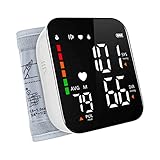
- Best Value: Greetmed Wrist Blood Pressure Monitor Automatic Talking Wrist Blood Pressure Cuff Digital Full Screen LED Display Bp Machine Adjustable Bp Cuff Voice Broadcast Health Care for Home Use
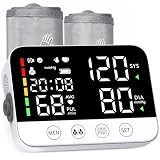
- Premium Choice: easy@Home Digital Talking Blood Pressure Monitor for Home Use – BP Machine

Talking Blood Pressure Monitor: Best Voice-Guided BP Cuffs for Seniors with Low Vision
Quick Answer (TL;DR)
A talking blood pressure monitor announces systolic, diastolic, and pulse readings aloud — removing the need to read a small screen. This matters for seniors with macular degeneration, diabetic retinopathy, or any visual impairment that makes LCD number-reading unreliable. The A&D Medical Talking BP Monitor (ASIN B0BZ41GW6Y) uses clinically validated oscillometric measurement with a clear voice readout and large cuff range, making it one of the most recommended models by home health nurses for visually impaired patients.
🛒 Best Price Today on Amazon
Prime members get fast, free shipping on everything above, plus member-only deals. New members get a 30-day free trial — cancel anytime.
As an Amazon Associate we earn from qualifying purchases.



Top Picks at a Glance
Best Overall
A&D Medical Talking Upper Arm BP Monitor
Clinically validated, voice readout in multiple languages, irregular heartbeat detection, 60-reading memory, fits 9″–17″ arm circumference.

Grab Bars for Shower, 16 Inch Shower Handle, 2 Pack, Polished Nickel | Grab Bars for Bathroom, Stainless Steel, Anti-Slip Textured Grip, 1-Inch Diameter, Wall-Mounted Safety Support for Seniors


As an Amazon Associate we earn from qualifying purchases. Product prices and availability are accurate as of the date/time indicated.
Best for Large Arms
Omron Platinum Upper Arm (BP5450)
Bluetooth + voice, fits up to 17″, 200-reading storage, 2-user mode. Pairs with Omron Connect app for caregiver sharing — useful when a family member tracks readings remotely.
Search “Omron BP5450 talking” on Amazon for current pricing.
Best Budget Voice Monitor
GreaterGoods Talking BP Monitor
Under $45, voice readout, 60-reading memory, irregular heartbeat flag. Good starter unit; clinical validation not published, so not appropriate for patients whose physician requires validated readings.
Search “GreaterGoods talking blood pressure monitor” on Amazon for current pricing.
Why Clinical Validation Matters for Home BP Monitors
The American Heart Association (AHA) recommends that home blood pressure monitors be clinically validated using established protocols — most commonly the AAMI/ISO 81060-2 standard or the Dabl Educational Trust validation list. An uncertified consumer device can read 10–20 mmHg off from true values, which is clinically significant: a systolic reading of 140 mmHg vs. 155 mmHg is the difference between a borderline reading and Stage 2 hypertension requiring medication adjustment.
When a physician prescribes home BP monitoring, they are relying on those readings to guide treatment. Using a non-validated device introduces systematic error into that clinical decision loop. Always verify validation status before purchase — the brand should list it in the product specifications or on their website.
Grab Bars for Shower, 16 Inch Shower Handle, 2 Pack, Polished Nickel | Grab Bars for Bathroom, Stainless Steel, Anti-Slip Textured Grip, 1-Inch Diameter, Wall-Mounted Safety Support for Seniors
As an Amazon Associate we earn from qualifying purchases. Product prices and availability are accurate as of the date/time indicated.
Talking BP Monitor Comparison: Key Specs
| Spec | What to Look For | Why It Matters |
|---|---|---|
| Clinical validation | AAMI/ISO 81060-2 or Dabl/BIHS listed | Accuracy you can trust for medication management |
| Voice readout | Clear, adjustable volume; announces systolic, diastolic, pulse | Primary feature for low-vision users |
| Cuff size range | 9″–17″ covers most adults; verify your arm circumference | Incorrect cuff size = inaccurate reading (up to ±15 mmHg) |
| Irregular heartbeat detection | Automatic flag during measurement | Early atrial fibrillation screening signal |
| Memory capacity | 60+ readings preferred; 2-user mode useful for couples | Enables trend tracking between appointments |
| Power source | 4 AA batteries or AC adapter | Battery backup critical if patient has unreliable power |
| Display size | Large digit display as backup to voice | Useful when voice is not appropriate (night readings) |
How to Use a Talking Blood Pressure Monitor Correctly
Measurement technique accounts for more variability in home BP readings than equipment quality. The AHA recommends this protocol for home readings:
- Rest for 5 minutes before measuring. Do not measure within 30 minutes of exercise, caffeine, smoking, or a full meal. These elevate readings by 5–20 mmHg.
- Sit with back supported, feet flat on the floor. Dangling legs or a slouched posture increase diastolic readings.
- Place the cuff on bare skin, not over clothing. Even a thin shirt sleeve under the cuff introduces measurement error.
- Position the cuff at heart level. If the arm hangs at the side, readings will be falsely high. Rest the forearm on a table or armrest at the height of the mid-chest.
- Stay still and silent during the measurement. Speaking during inflation inflates systolic readings.
- Take two readings, 1 minute apart. Record both. Discard the first if it is substantially higher — the first reading is often an outlier due to patient anticipation (white-coat effect at home).
BP Target Ranges for Seniors: What the Numbers Mean
| AHA Category | Systolic (mmHg) | Diastolic (mmHg) | Action |
|---|---|---|---|
| Normal | Below 120 | Below 80 | Continue monitoring; healthy lifestyle |
| Elevated | 120–129 | Below 80 | Lifestyle modification; recheck in 3–6 months |
| Stage 1 Hypertension | 130–139 | 80–89 | Discuss medication with physician |
| Stage 2 Hypertension | 140+ | 90+ | Medication typically required; follow up promptly |
| Hypertensive Crisis | 180+ | 120+ | Call 911 or seek emergency care immediately |
Note for seniors 65+: The 2017 ACC/AHA guidelines apply a systolic target below 130 mmHg for most older adults, but individualized targets may apply — particularly for frail elderly patients where aggressive lowering increases fall risk. Always follow your physician’s specific target range, not a general table.
Grab Bars for Shower, 16 Inch Shower Handle, 2 Pack, Polished Nickel | Grab Bars for Bathroom, Stainless Steel, Anti-Slip Textured Grip, 1-Inch Diameter, Wall-Mounted Safety Support for Seniors
As an Amazon Associate we earn from qualifying purchases. Product prices and availability are accurate as of the date/time indicated.
Wrist vs. Upper Arm: Why Upper Arm Wins for Seniors
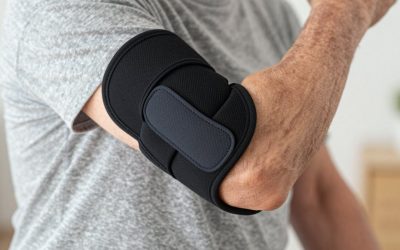
Wrist monitors are compact and easy to apply, but they are highly position-sensitive — the wrist must be held at exactly heart level for an accurate reading, which is difficult for patients with limited arm mobility or tremor. Upper arm cuffs are more forgiving of minor positioning errors and are the format used in clinical validation studies. The AHA recommends upper arm monitors for home use in all adults, and particularly for seniors managing hypertension with medication.
For patients with atrial fibrillation, standard oscillometric monitors (including talking models) may produce invalid readings — the irregular pulse confounds the algorithm. These patients should use monitors with AFib-detection features and confirm all home readings with auscultatory measurement at the clinic.
Also see our medical alert system comparison and pill organizer guide for a complete home health monitoring toolkit.
Frequently Asked Questions
What is a talking blood pressure monitor?
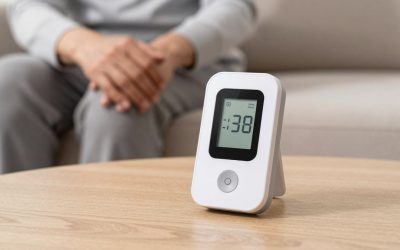
A talking blood pressure monitor is a standard automatic oscillometric BP cuff that also announces the measurement results through a built-in speaker. After inflation and deflation, the device reads the systolic pressure, diastolic pressure, and pulse rate aloud — eliminating the need to read a small LCD screen. This feature is designed for individuals with low vision, blindness, or any difficulty reading small numbers.
Are talking blood pressure monitors as accurate as regular monitors?
Yes — the voice feature is an output add-on, not a change to the measurement technology. Accuracy depends on clinical validation of the underlying oscillometric algorithm, not whether the device has voice readout. Check that the specific model (not just the brand) appears on a clinical validation list before purchasing for medication management.
How do I know if my arm cuff fits correctly?
Measure your upper arm circumference midway between the elbow and shoulder. Standard adult cuffs fit 9″–13″ (23–33 cm). Large adult cuffs fit 13″–17″ (33–43 cm). An undersized cuff produces falsely high readings; an oversized cuff produces falsely low readings. Cuff size error is the most common source of inaccurate home readings.
How often should seniors measure their blood pressure at home?
The AHA and ACC recommend twice daily — morning before medication, and evening before bed — for patients actively managing hypertension or adjusting medications. Once stable, one morning reading daily or a cluster of readings before each physician visit may suffice. Follow your physician’s specific protocol; more frequent monitoring without clinical guidance can cause anxiety without improving outcomes.
Can I use a talking blood pressure monitor if I have an irregular heartbeat?
Use models with specific AFib detection features. Standard oscillometric monitors may generate error codes or inaccurate readings with highly irregular rhythms. Dedicated AFib-detection monitors (such as those with Microlife’s AFIB algorithm) are validated for this patient population. Discuss with your cardiologist before relying on home readings to guide AF treatment decisions.
Related Reviews & Guides


Senior Orthopedic Knee Pillow Sleeping

11 Best Pulse Oximeters for Seniors: Monitor Blood Oxygen at Home